
Mentorship Process for Entrepreneurs: Accelerate Growth Now
Entrepreneurs with mentors are over 30 percent more likely to achieve long-term business growth compared to those without guidance. Finding the right mentorship shapes not only your business trajectory but also how quickly you turn knowledge into results. Whether you are launching your first product or aiming to scale new markets, the steps you take to define goals, connect with mentors, and structure these relationships will determine your progress and impact. Get practical guidance to build mentorship strategies that drive lasting success.
Table of Contents
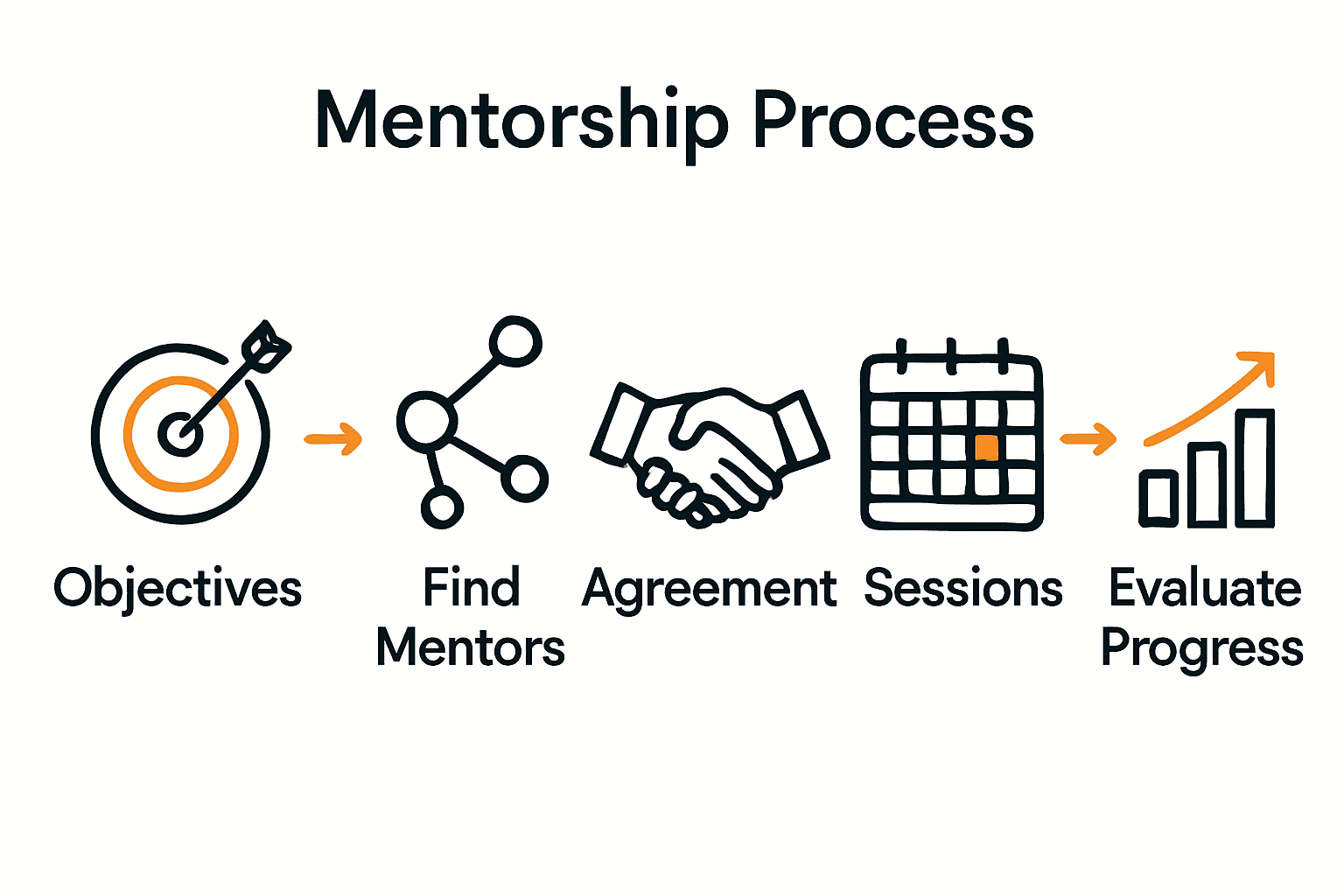
- Step 1: Define Your Mentorship Objectives And Needs
- Step 2: Identify And Connect With The Right Mentors
- Step 3: Structure Effective Mentorship Agreements
- Step 4: Engage In Purposeful Mentorship Sessions
- Step 5: Evaluate Progress And Adapt Mentorship Strategies
Quick Summary
| Key Point | Explanation |
|---|---|
| 1. Define clear mentorship objectives | Pinpoint specific areas needing guidance to attract suitable mentors and achieve measurable results. |
| 2. Connect with relevant mentors | Research and approach mentors with proven success in your specific business needs for effective guidance. |
| 3. Craft a structured mentorship agreement | Create a flexible agreement detailing goals, meeting frequency, and expectations to ensure accountability. |
| 4. Engage actively in mentorship sessions | Prepare agendas and ask questions during meetings to foster interactive, meaningful discussions. |
| 5. Regularly evaluate progress and adapt strategies | Implement quarterly reviews to reflect on growth and adjust mentorship approaches as needed for continuous improvement. |
 |
|
Step 1: Define your mentorship objectives and needs
Defining clear mentorship objectives is your strategic roadmap for accelerated entrepreneurial growth. According to research from arxiv, your ability to recognize business opportunities directly correlates with accessing knowledge networks and understanding your intellectual capital.
Start by conducting a thorough self assessment of your current business stage and skill gaps. Ask yourself critical questions about where you need the most guidance: Are you struggling with product development? Seeking market expansion strategies? Need help refining your business model? Pinpoint precise areas where external expertise can provide transformative insights.
A powerful approach involves creating a structured objectives matrix. List your top 3-5 business challenges or developmental goals. For each goal, outline specific outcomes you want to achieve through mentorship. This might include metrics like revenue targets, skill acquisition milestones, or strategic planning benchmarks. The more specific and measurable your objectives, the more effectively you can match with the right mentor who has demonstrated expertise in those precise domains.
Warning: Avoid generic mentorship goals. Vague objectives like “grow my business†will not attract high caliber mentors or produce meaningful results. Precision is your greatest ally in this process.

Step 2: Identify and connect with the right mentors
Identifying the right mentors requires strategic networking and targeted research. According to the Institute of Entrepreneurship Development, crafting a compelling elevator pitch is your first critical step in attracting high quality mentorship connections.
Start by leveraging multiple networking channels. Professional platforms like LinkedIn, industry specific forums, and entrepreneurial communities offer robust mentor discovery opportunities. Look for potential mentors who have demonstrable success in your specific business domain. Pay attention to their professional trajectory track record achievements and areas of expertise that align with your specific objectives outlined in your previous mentorship goals assessment.
To maximize your mentor search effectiveness develop a systematic approach. Create a mentor prospect list with 10 15 potential candidates who match your professional requirements. Research their background thoroughly understand their professional journey and identify specific ways their experience could benefit your entrepreneurial growth. When reaching out prepare a concise personalized introduction that highlights why you believe their mentorship would be mutually valuable.
Warning: Avoid generic connection requests. Mentors receive numerous solicitations and will likely ignore messages that appear formulaic or self serving. Your initial outreach should demonstrate genuine respect for their time and a clear understanding of how their specific expertise could help you overcome your current business challenges.
Step 3: Structure effective mentorship agreements
Crafting a robust mentorship agreement transforms your entrepreneurial relationship from casual conversation to strategic partnership. Research from arxiv highlights the critical importance of structured agreements that adapt to different entrepreneurial phases and clearly define mutual expectations.
Begin by developing a comprehensive document that outlines specific goals meetings frequency communication protocols and expected outcomes. Your agreement should address key elements like meeting duration typically 45 to 60 minutes confidentiality boundaries performance metrics and clear roles. Include specific milestones you want to achieve through the mentorship. This might involve quarterly business reviews skill development targets or specific strategic challenges you want guidance navigating.
A powerful approach involves creating a flexible yet structured interaction framework. According to arxiv, successful mentor novice collaborations require intentional meeting design that promotes depth and focus. Consider implementing a meeting template that includes structured agenda items progress tracking mechanisms and reflection opportunities. This ensures each interaction delivers tangible value and maintains accountability for both parties.
Warning: Avoid overly rigid or vague agreements. The most effective mentorship relationships balance structured expectations with organic flexibility. Your agreement should feel like a living document that can adapt as your entrepreneurial journey evolves while maintaining clear mutual commitment.
Step 4: Engage in purposeful mentorship sessions
Transforming mentorship conversations into meaningful growth opportunities requires intentional preparation and strategic engagement. As research from Wikipedia emphasizes the value of purposeful interactions the key is to maximize every mentoring moment with focused intent and clear objectives.
Prepare thoroughly for each mentorship session by developing a structured agenda that addresses specific challenges and learning goals. Drawing insights from arxiv about task focused mentoring come equipped with concrete problems concrete questions and specific scenarios you want guidance on. Before each meeting compile a prioritized list of topics research potential solutions and be prepared to share your current thinking. This demonstrates respect for your mentors time and creates an environment of collaborative problem solving.
During the session practice active listening and remain open to constructive feedback. Take detailed notes document key insights and recommendations and develop immediate action steps based on your mentors guidance. Create a system for tracking and implementing recommendations this might involve a dedicated notebook digital tracking tool or structured follow up process that allows you to demonstrate progress and commitment in subsequent meetings.
Warning: Avoid turning mentorship sessions into passive listening experiences. The most valuable mentor relationships are interactive dynamic and require equal commitment from both parties. Your role is not just to receive wisdom but to actively engage transform insights into actionable strategies and demonstrate measurable growth.
Step 5: Evaluate progress and adapt mentorship strategies
Successful mentorship is an evolving journey that requires consistent reflection and strategic recalibration. As Wikipedia highlights the importance of ongoing evaluation entrepreneurial growth demands a dynamic approach to tracking your progress and adjusting your mentorship strategies accordingly.
Implement a structured quarterly review process that goes beyond surface level assessments. Drawing insights from the Market Opportunity Navigator methodology create a comprehensive evaluation framework. Develop a scorecard that measures tangible outcomes like revenue growth skill acquisition strategic milestone achievements and intangible metrics such as confidence levels network expansion and problem solving capabilities. Schedule dedicated reflection sessions with your mentor to discuss these metrics analyze patterns and identify areas requiring strategic pivot or deeper focus.
Document your progress meticulously through a combination of quantitative metrics and qualitative insights. Maintain a growth journal that tracks your entrepreneurial journey capturing not just achievements but also challenges learning experiences and transformative moments. This documentation serves multiple purposes it provides a clear narrative of your development helps you communicate effectively with your mentor and creates a valuable record of your professional evolution that can inform future mentorship strategies.
Warning: Avoid becoming complacent or resistant to change. The most successful entrepreneurs view mentorship as a collaborative learning experience that requires continuous adaptation. Be prepared to challenge your existing assumptions reevaluate your goals and remain open to radical shifts in your approach when new insights emerge.
Unlock Your Entrepreneurial Potential with Tailored Mentorship and Community Support
Are you ready to overcome the common challenges of entrepreneurship like defining clear business objectives or finding the right mentor? This article highlights how focused mentorship and structured growth strategies are essential to accelerate your venture’s progress. Building on these insights, Nomad Excel offers immersive entrepreneurship bootcamps that empower founders with hands-on frameworks, direct mentorship, and a supportive community to help you refine your goals, gain expert guidance, and track your growth effectively.
Do not let uncertainty or lack of direction slow down your progress. Join a dynamic group of entrepreneurs driven by clarity, execution, and collaboration. Explore our full range of programs designed to deliver actionable results and long-lasting networks or dive into inspiring stories in our inspiration archives to see how others have transformed their businesses. Accelerate your journey today by taking the next step at Nomad Excel.
Frequently Asked Questions
How can I define my mentorship objectives to accelerate growth as an entrepreneur?
Defining your mentorship objectives begins with a self-assessment of your current business stage and skill gaps. Identify 3-5 specific areas where you need guidance, such as product development or market expansion, to attract mentors with relevant expertise.
What steps should I take to identify the right mentors for my business?
To identify the right mentors, leverage professional networking channels like LinkedIn and entrepreneurial communities. Create a list of 10-15 potential mentors whose success aligns with your business objectives, ensuring to personalize your outreach to demonstrate genuine interest in their expertise.
How do I structure a mentorship agreement effectively?
A strong mentorship agreement outlines specific goals, meeting frequency, and roles for both parties involved. Develop a document that includes clear expectations and milestones to maintain accountability and allows for adjustments as your entrepreneurial journey progresses.
What should I prepare before each mentorship session?
Before each mentorship session, create a structured agenda that outlines specific challenges and learning goals you wish to address. Prepare concrete questions and scenarios to engage your mentor effectively and foster an environment of collaborative problem-solving during your discussions.
How can I evaluate my progress in mentorship and adapt my strategies?
To evaluate progress, implement a quarterly review process that focuses on tangible metrics like revenue growth alongside qualitative insights. Document your journey in a growth journal to track achievements, challenges, and learning moments, and use this documentation to inform necessary adjustments in your mentorship approach.
Recommended
- Role of Mentorship in Entrepreneurship: Complete Guide – Nomad Excel – Your Entrepreneurial Adventure Starts Here
- Entrepreneurial Leadership Guide for Accelerated Growth – Nomad Excel – Your Entrepreneurial Adventure Starts Here
- Entrepreneurship Skills Guide for Launching Your Own Venture – Nomad Excel – Your Entrepreneurial Adventure Starts Here
- Personal Business Growth: Complete Guide for Entrepreneurs – Nomad Excel – Your Entrepreneurial Adventure Starts Here
Comments are closed.