The Essential Guide to the Future of Entrepreneurship Education
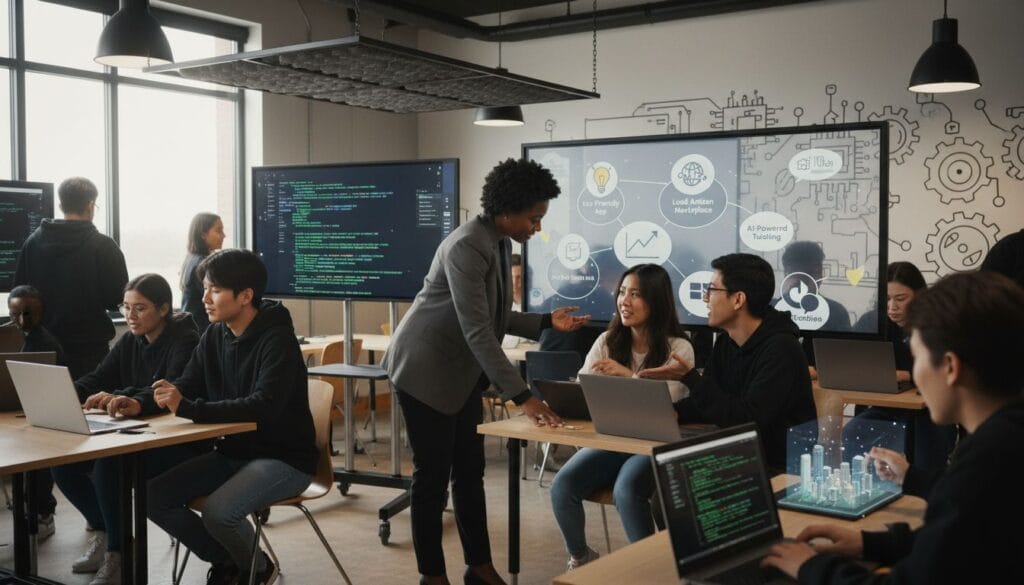
Over 85 percent of educators now believe that entrepreneurship learning must go beyond textbooks and lectures to truly equip students for a changing world. Rapid advances in technology are transforming the way business skills are taught and learned, opening up opportunities for more personalized, hands-on learning experiences. As digital tools, real-world simulations, and new frameworks take center stage, this shift is shaping a new generation of entrepreneurs who are better prepared for today’s fast-moving global market.
Table of Contents
- Defining The Future Of Entrepreneurship Education
- Emerging Models And Innovative Frameworks
- Key Skills And Mindsets For Tomorrow’s Entrepreneurs
- Impact Of Technology On Entrepreneurship Learning
- Real-World Applications And Global Trends
Key Takeaways
| Point | Details |
|---|---|
| Personalized Learning | The future of entrepreneurship education will leverage technology for customized learning experiences tailored to individual goals and entrepreneurial ambitions. |
| Innovative Frameworks | Emerging methodologies like Lean LaunchPad emphasize experiential learning and real-world validation over traditional theoretical approaches. |
| Critical Skills Development | Future entrepreneurs must cultivate a growth-oriented mindset, adaptive problem-solving abilities, and digital literacy to thrive in a dynamic business landscape. |
| Global Transformation | Entrepreneurship education is increasingly adopting inclusive and community-focused models, promoting access to skills across diverse and underrepresented populations worldwide. |
Defining the Future of Entrepreneurship Education
The landscape of entrepreneurship education is rapidly transforming, driven by technological innovations and evolving business paradigms. According to research from arXiv, the future of entrepreneurship learning will be characterized by personalized guidance and practical alignment in business development strategies.
Digital technologies are revolutionizing how entrepreneurs learn and prepare for complex business environments. As insights from Digital Learning Edge reveal, educational approaches are increasingly integrating multimedia resources, virtual simulations, and online platforms to create immersive learning experiences. These technological interventions aim to enhance accessibility and engagement for aspiring entrepreneurs.
Key dimensions of next-generation entrepreneurship education will include:
- Adaptive learning systems tailored to individual entrepreneurial goals
- AI-powered mentorship and personalized skill development
- Real-world problem-solving through interactive digital platforms
- Curriculum design that emphasizes practical execution over theoretical concepts
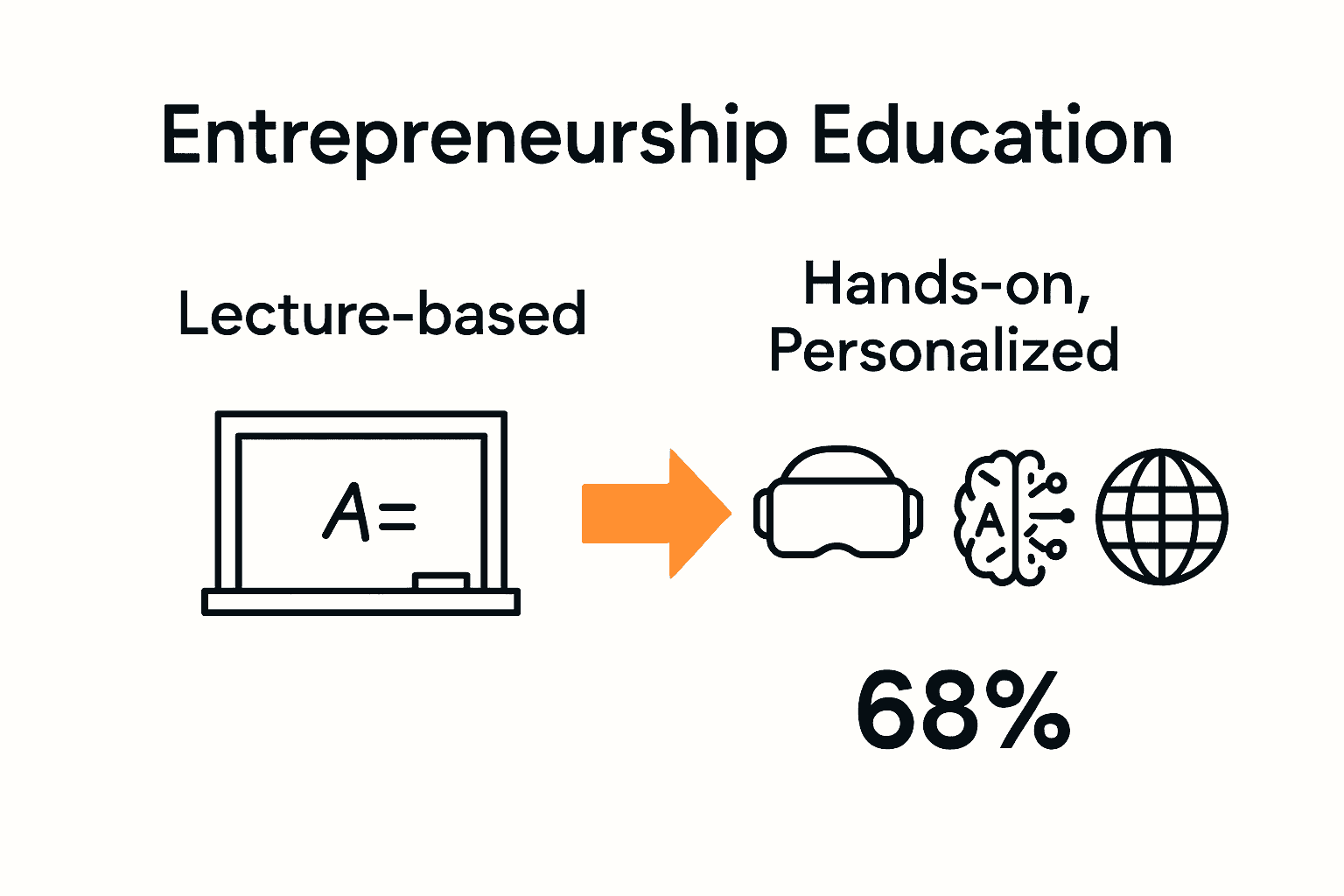
The future of entrepreneurship education is not just about transferring knowledge but creating dynamic, interactive learning environments that prepare individuals to navigate complex, rapidly changing business landscapes. By leveraging technology and personalized approaches, educational institutions can develop more responsive and effective entrepreneurial learning frameworks.
Emerging Models and Innovative Frameworks
Entrepreneurship education is evolving beyond traditional classroom learning, embracing innovative methodologies that bridge theoretical knowledge with practical execution. According to insights from Wikipedia, the Lean LaunchPad methodology represents a groundbreaking approach that combines experiential learning with dynamic business model development strategies.
The Lean LaunchPad model introduces a revolutionary framework for entrepreneurial training by integrating three critical components: the Business Model Canvas, Customer Development Model, and Agile Engineering. This approach fundamentally transforms how entrepreneurs conceptualize, test, and refine their business ideas through continuous customer feedback and iterative refinement. By prioritizing real-world validation over theoretical planning, this model enables aspiring entrepreneurs to develop more resilient and adaptive business strategies.
Additional emerging frameworks that are reshaping entrepreneurship education include:
- Strategic Opportunity Analysis Models: Such as the IpOp model, which provides structured approaches for pre-project innovation management
- Experiential learning platforms with built-in feedback mechanisms
- Collaborative learning environments that simulate real-world business challenges
- Adaptive curriculum design emphasizing practical skill development
These innovative models represent a significant shift from traditional entrepreneurship education. They prioritize hands-on experience, iterative learning, and direct market interaction over passive knowledge absorption. By creating dynamic, responsive learning environments, these frameworks are preparing a new generation of entrepreneurs who are agile, customer-focused, and equipped to navigate complex business landscapes.

Key Skills and Mindsets for Tomorrow’s Entrepreneurs
The entrepreneurial landscape is continuously evolving, demanding a dynamic set of skills and adaptive mindsets that go beyond traditional business knowledge. Entrepreneurship Skills Guide for Launching Your Own Venture highlights the critical importance of developing a multifaceted skill set that combines technical expertise with emotional intelligence and strategic thinking.
Tomorrow’s successful entrepreneurs will need to cultivate a resilient and growth-oriented mindset that embraces uncertainty and transforms challenges into opportunities. This requires developing a unique combination of cognitive flexibility, continuous learning, and the ability to navigate complex, rapidly changing business ecosystems. The most effective entrepreneurs will be those who can quickly adapt their strategies, learn from failures, and maintain a forward-thinking perspective.
Key skills and mindsets for future entrepreneurs include:
- Adaptive Problem-Solving: Ability to develop innovative solutions in unpredictable environments
- Digital Literacy: Comprehensive understanding of emerging technologies and digital transformation
- Emotional Intelligence: Strong interpersonal skills and self-awareness
- Global Perspective: Understanding of cross-cultural business dynamics
- Sustainable Innovation: Commitment to creating value beyond financial returns
Ultimately, the most successful entrepreneurs will be those who view their skills as a continuously evolving toolkit. By embracing lifelong learning, maintaining intellectual curiosity, and developing a holistic approach to business challenges, future entrepreneurs can position themselves to thrive in an increasingly complex and interconnected global marketplace.
Impact of Technology on Entrepreneurship Learning
Technology is fundamentally reshaping the landscape of entrepreneurship education, introducing innovative learning approaches that transcend traditional classroom boundaries. According to research from arXiv, Generative Artificial Intelligence (GenAI) is driving significant transformations across five critical thematic clusters, including digital transformation, learning systems, and sustainable innovation.
One of the most exciting developments in technological entrepreneurship learning is the emergence of interactive educational platforms. arXiv highlights the Entrexplorer game as a pioneering example of a cloud-based serious game designed to teach entrepreneurial skills through immersive, gamified experiences. These technological interventions allow learners to acquire complex business skills through hands-on, interactive gameplay that simulates real-world entrepreneurial challenges.
Key technological impacts on entrepreneurship learning include:
- Personalized Learning Pathways: AI-driven adaptive curriculum design
- Immersive Simulation Environments: Virtual and augmented reality business scenarios
- Global Collaboration Tools: Connecting entrepreneurs across geographical boundaries
- Real-time Skill Assessment: Advanced analytics tracking learning progress and competency development
- Adaptive Learning Technologies: Customized educational experiences based on individual learning styles
As technological innovations continue to evolve, entrepreneurship education will become increasingly dynamic, interactive, and tailored to individual learning needs. Navigating Post-COVID Entrepreneurship as a Digital Nomad underscores the importance of embracing these technological transformations, recognizing that the future of learning lies in creating flexible, engaging, and technologically advanced educational experiences that prepare entrepreneurs for an ever-changing global business landscape.
Real-World Applications and Global Trends
Entrepreneurship education is experiencing a remarkable global transformation, with innovative programs expanding access to entrepreneurial skills across diverse communities. Network for Teaching Entrepreneurship represents a powerful example of this trend, offering experiential learning programs in 25 U.S. states and 14 countries, with a specific focus on empowering underserved communities through practical entrepreneurship training.
Regional networks are playing an increasingly critical role in developing entrepreneurship ecosystems and knowledge exchange. ERENET, a research and development network focused on Central and Eastern European universities, demonstrates how collaborative platforms can enhance curriculum development and foster cross-border entrepreneurial learning. These networks create vital connections between academic institutions, industry experts, and emerging entrepreneurs, facilitating a more integrated and dynamic approach to business education.
Key global trends in entrepreneurship education include:
- Inclusive Learning Models: Programs targeting marginalized and underrepresented communities
- Cross-Cultural Collaboration: International networks sharing entrepreneurial knowledge
- Social Impact Focus: Entrepreneurship education emphasizing sustainable and ethical business practices
- Localized Curriculum Design: Tailoring entrepreneurship training to regional economic contexts
- Community-Driven Learning: Peer-to-peer knowledge exchange and mentorship platforms
The future of entrepreneurship education lies in creating adaptable, accessible, and globally connected learning environments that transcend traditional educational boundaries. By embracing diverse perspectives, leveraging technological innovations, and prioritizing real-world skill development, these emerging trends are democratizing entrepreneurial knowledge and creating unprecedented opportunities for aspiring business leaders worldwide.
Unlock the Future of Entrepreneurship Education with Nomad Excel
The article highlights the urgent need for personalized, practical, and technology-driven learning experiences to prepare entrepreneurs for a rapidly evolving business world. If you are seeking guidance on adaptive problem-solving, digital literacy, and real-world execution, you are not alone. The future demands more than theory it calls for immersive, hands-on learning that sharpens strategy and builds resilient entrepreneurial skills.
Nomad Excel offers you this exact opportunity through our immersive programs tailored to aspiring and early-stage entrepreneurs. Our bootcamps blend mentorship, community support, and action-focused sprints designed to turn ideas into scalable businesses now. Don’t wait to embrace the dynamic entrepreneurial mindset and skills that tomorrow requires.
Ready to experience entrepreneurship education built for the future Visit Nomad Excel today and explore our entrepreneurship resources for the first step toward accelerating your business growth and joining a vibrant community of changemakers.
Frequently Asked Questions
What are the key dimensions of next-generation entrepreneurship education?
Next-generation entrepreneurship education emphasizes adaptive learning systems tailored to individual goals, AI-powered mentorship, real-world problem-solving through interactive platforms, and a curriculum focused on practical execution over theoretical concepts.
How is technology impacting entrepreneurship learning?
Technology is transforming entrepreneurship education by introducing personalized learning pathways, immersive simulation environments, global collaboration tools, real-time skill assessment, and adaptive learning technologies that create engaging and customized educational experiences.
What skills and mindsets are essential for future entrepreneurs?
Future entrepreneurs should develop adaptive problem-solving abilities, digital literacy, emotional intelligence, a global perspective, and a commitment to sustainable innovation. Embracing a resilient and growth-oriented mindset is also crucial for navigating complex business environments.
What innovative frameworks are reshaping entrepreneurship education?
Innovative frameworks such as the Lean LaunchPad methodology, experiential learning platforms, collaborative learning environments, and strategic opportunity analysis models are reshaping entrepreneurship education by prioritizing hands-on experience and real-world validation over passive learning.
Recommended
- The Essential Guide to Benefits of Entrepreneurial Mindset – Nomad Excel – Your Entrepreneurial Adventure Starts Here
- Role of Mentorship in Entrepreneurship: Complete Guide – Nomad Excel – Your Entrepreneurial Adventure Starts Here
- Role of Networking in Entrepreneurship: Essential Guide – Nomad Excel – Your Entrepreneurial Adventure Starts Here
- 7 Must-Have Skills for an Entrepreneurship Skills Checklist – Nomad Excel – Your Entrepreneurial Adventure Starts Here
Comments are closed.