
Entrepreneurial Leadership Explained: Complete Guide
Nearly 60 percent of american business leaders identify adaptability as the top trait needed for modern success. In a world where change is constant and competition is fierce, traditional management styles often fall short. Entrepreneurial leadership shapes how ambitious americans innovate, inspire teams, and turn new ideas into business growth. This article highlights the defining qualities, essential mindsets, and strategic approaches that help american entrepreneurs lead with confidence and agility.
Table of Contents
- Defining Entrepreneurial Leadership and Its Role
- Key Traits of Successful Entrepreneurial Leaders
- Leadership Styles in Entrepreneurial Environments
- Core Principles for Driving Business Growth
- Developing Practical Skills and Mindsets
- Common Pitfalls and How to Avoid Them
Key Takeaways
| Point | Details |
|---|---|
| Entrepreneurial Leadership Focuses on Innovation | This leadership style emphasizes adaptability, calculated risk-taking, and proactive opportunity identification to drive organizational success. |
| Key Traits of Successful Leaders | Successful entrepreneurial leaders typically possess emotional intelligence, strategic vision, and a persistent problem-solving mindset. |
| Varied Leadership Styles Enhance Effectiveness | Effective entrepreneurial leaders switch between charismatic, transformational, visionary, and transactional styles to address challenges and inspire their teams. |
| Avoid Common Entrepreneurial Pitfalls | Overconfidence and neglecting team development can hinder success; cultivating a growth mindset is essential to overcome these challenges. |
Defining Entrepreneurial Leadership and Its Role
Entrepreneurial leadership represents a dynamic approach to guiding organizations and teams toward innovation, growth, and strategic success. According to Wikipedia, it involves organizing groups to achieve common goals through proactive behavior, strategic risk management, and the ability to seize emerging opportunities.
At its core, entrepreneurial leadership transcends traditional management paradigms by emphasizing personal responsibility, adaptability, and a forward-thinking mindset. Research from AJBASWeb defines this leadership style as an individual approach that combines entrepreneurial and leadership functions to develop new products, services, and organizational structures.
Key characteristics of entrepreneurial leadership include:
- Proactive opportunity identification
- Calculated risk-taking
- Innovative problem-solving
- Personal accountability
- Adaptability in dynamic environments
Successful entrepreneurial leaders understand that leadership is not about maintaining the status quo, but continuously evolving and challenging existing paradigms. They create environments that foster creativity, encourage calculated risk-taking, and empower team members to contribute meaningfully to organizational objectives.
Learn more about entrepreneurial thinking in our comprehensive guide to unlock your potential for transformative leadership.
Key Traits of Successful Entrepreneurial Leaders
Successful entrepreneurial leaders possess a unique combination of skills and personality traits that distinguish them in dynamic business environments. According to Northeastern University’s Damore-McKim School, these leaders exhibit critical characteristics such as creativity, strategic vision, adaptability, confidence, decisiveness, and the remarkable ability to inspire and delegate effectively.
Strategic vision and adaptability are foundational traits that enable entrepreneurial leaders to navigate complex business landscapes. Research from ArXiv reveals fascinating insights into entrepreneurial personality profiles, highlighting that successful entrepreneurs often demonstrate unique psychological characteristics like openness to adventure, lower levels of modesty, and higher activity levels.
Key psychological and operational traits of successful entrepreneurial leaders include:
- High emotional intelligence
- Comfort with calculated risk-taking
- Persistent problem-solving mindset
- Strong network-building capabilities
- Resilience in face of challenges
Beyond individual characteristics, entrepreneurial leadership is about creating transformative environments that encourage innovation and collective growth.
 Explore our guide on entrepreneurial leadership for accelerated growth to understand how these traits translate into tangible business success and organizational development.
Leadership Styles in Entrepreneurial Environments
Entrepreneurial leadership demands a nuanced approach to guiding teams and organizations through complex, rapidly changing business landscapes. According to research from ABA Academies, leaders in disruptive contexts typically leverage multiple leadership styles, including charismatic, transformational, visionary, and transactional approaches to navigate challenges and drive venture success.
The effectiveness of entrepreneurial leadership extends beyond traditional management techniques. Research from JMEDDA highlights that successful leadership in dynamic industries involves a complex interplay of personal traits, cognitive capabilities, and strategic skills such as:
- Opportunity recognition
- Continuous entrepreneurial learning
- Sophisticated resource management
- Adaptive decision-making
- Strategic relationship building
Each leadership style offers unique advantages in entrepreneurial environments. Transformational leaders inspire innovation, charismatic leaders motivate through personal magnetism, visionary leaders chart bold future paths, and transactional leaders ensure operational efficiency. The most effective entrepreneurs master the art of switching between these styles based on specific organizational needs and challenges. Explore our comprehensive guide on types of entrepreneurship to understand how different leadership approaches can unlock your venture’s potential.
Core Principles for Driving Business Growth
Entrepreneurial success hinges on understanding and implementing strategic principles that propel business development. According to research from International ARIMBI, entrepreneurial leadership fundamentally combines visionary leadership with adaptive strategies, enabling organizations to navigate complex and dynamic market landscapes effectively.
Research from AJBASWeb reveals that successful entrepreneurs share critical psychological attributes, including a high internal locus of control and an extraordinary drive to achieve goals. These foundational principles for business growth encompass:
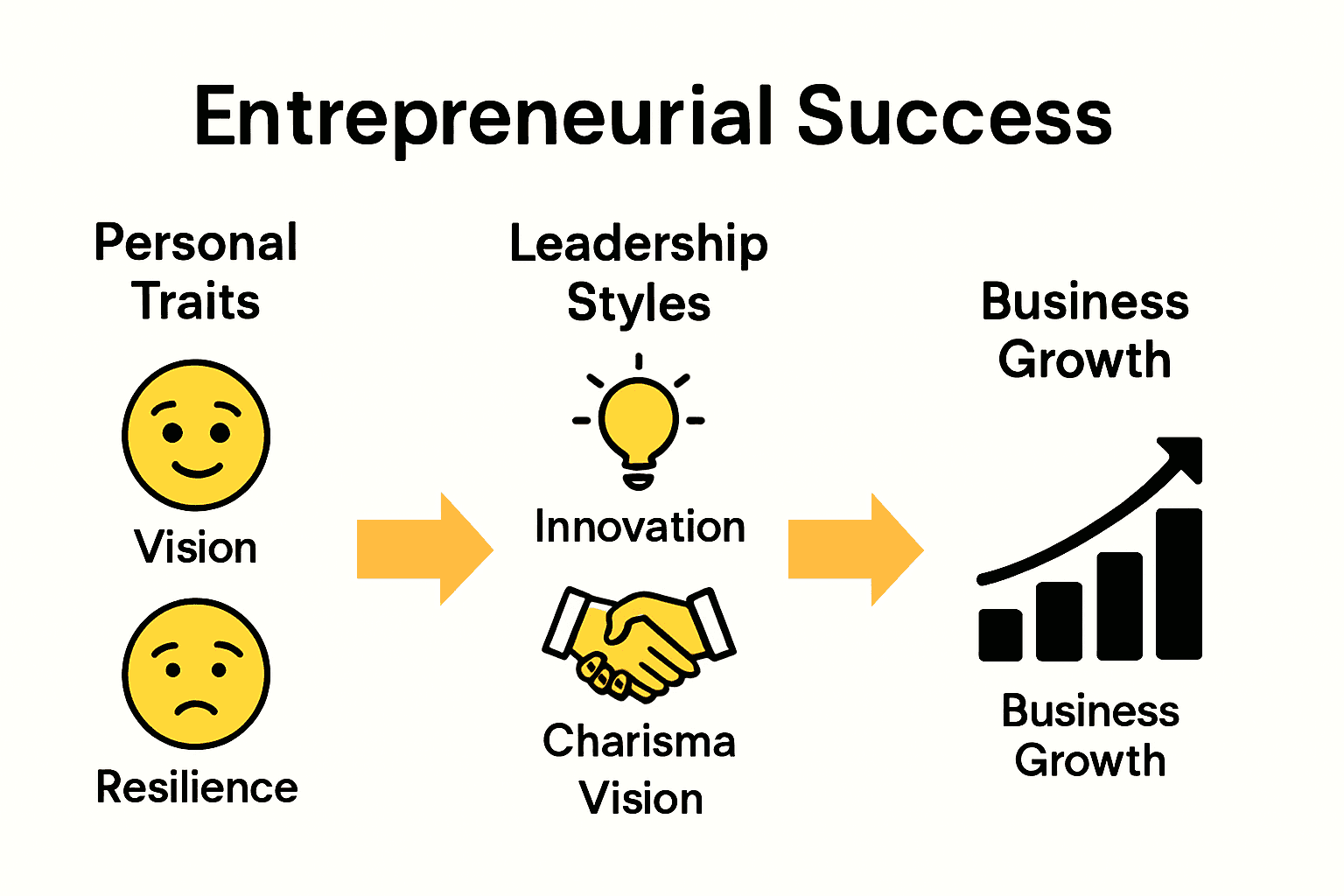
- Persistent goal-oriented thinking
- Strong internal motivation
- Continuous strategic adaptation
- Proactive opportunity identification
- Resilient problem-solving approach
Transforming these principles into actionable strategies requires a holistic approach that balances personal leadership qualities with systematic business practices. Entrepreneurs must cultivate a mindset of continuous learning, remain agile in their strategic planning, and develop the capacity to pivot quickly when market conditions shift. Explore our comprehensive personal business growth guide to discover how you can translate these core principles into tangible business success.
Developing Practical Skills and Mindsets
Successful entrepreneurs understand that developing practical skills and mindsets requires intentional, strategic personal development. According to research from ArXiv, emotional intelligence emerges as a critical foundation, encompassing self-awareness, self-regulation, empathy, and sophisticated social skills that enable leaders to build cohesive and high-performing teams.
Research from AJBASWeb reveals that entrepreneurial leaders must master complex influencing tactics, including:
- Persuasive reasoning
- Strategic friendliness
- Effective coalition building
- Principled negotiation techniques
- Assertive communication
- Judicious use of authority
- Balanced conflict resolution
Developing these skills requires a commitment to continuous learning and self-improvement. Entrepreneurs must create deliberate practice environments that challenge their existing capabilities, foster adaptive thinking, and cultivate resilience. Explore our comprehensive entrepreneur mindset guide to transform theoretical knowledge into practical, actionable leadership strategies that drive personal and professional growth.
Common Pitfalls and How to Avoid Them
Entrepreneurial journeys are often fraught with challenges that can derail even the most promising ventures. According to research from Damore-McKim Northeastern, successful leaders can navigate these challenges by cultivating critical protective traits that act as strategic safeguards against common entrepreneurial mistakes.
The most prevalent pitfalls entrepreneurial leaders encounter include:
- Overconfidence and rigid thinking
- Neglecting team development
- Failing to adapt to market changes
- Underestimating financial complexities
- Poor risk management
- Lack of strategic networking
- Insufficient personal resilience
To effectively mitigate these risks, entrepreneurs must embrace a multifaceted approach of continuous learning, humility, and strategic flexibility. The key is developing a growth mindset that views challenges as opportunities for improvement rather than insurmountable obstacles. Discover our comprehensive entrepreneurship skills checklist to equip yourself with the tools necessary to anticipate and overcome potential entrepreneurial challenges.
Unlock Entrepreneurial Leadership with Hands-On Experience
Entrepreneurial leadership demands more than just theory. It requires developing practical skills like strategic vision, adaptability, and risk management to overcome common pitfalls such as rigid thinking and poor team development. If you aim to transform your leadership style, embrace a growth mindset, and lead your business confidently through change, you need a structured and supportive environment to accelerate that growth.
At Nomad Excel, we specialize in providing immersive bootcamps and tailored company retreats that equip entrepreneurs and teams with the exact tools and mentorship to build scalable businesses. Our programs combine expert guidance, peer collaboration, and daily execution routines focusing on real-world results. Start your leadership adventure today by exploring our Entrepreneurship Archives for insights or dive into our full range of offerings on the Program Archives. Visit Nomad Excel now and take the first step toward accelerating your entrepreneurial leadership journey.
Frequently Asked Questions
What is entrepreneurial leadership?
Entrepreneurial leadership is a dynamic leadership approach that focuses on driving innovation, growth, and strategic success by organizing groups to work towards common goals through proactive behavior and strategic risk management.
What traits do successful entrepreneurial leaders possess?
Successful entrepreneurial leaders typically showcase traits such as creativity, strategic vision, adaptability, confidence, decisiveness, emotional intelligence, and strong network-building capabilities.
How does entrepreneurial leadership differ from traditional leadership styles?
Entrepreneurial leadership transcends traditional management by emphasizing personal responsibility, adaptability, and a forward-thinking mindset, enabling leaders to create environments that foster creativity and empower team members.
What common pitfalls should entrepreneurs avoid?
Common pitfalls include overconfidence, neglecting team development, failing to adapt to market changes, underestimating financial complexities, and lacking strategic networking. Cultivating a growth mindset can help mitigate these risks.
Recommended
- Entrepreneurial Leadership Guide for Accelerated Growth – Nomad Excel – Your Entrepreneurial Adventure Starts Here
- The Essential Guide to Benefits of Entrepreneurial Mindset – Nomad Excel – Your Entrepreneurial Adventure Starts Here
- Role of Mentorship in Entrepreneurship: Complete Guide – Nomad Excel – Your Entrepreneurial Adventure Starts Here
- Role of Networking in Entrepreneurship: Essential Guide – Nomad Excel – Your Entrepreneurial Adventure Starts Here
Comments are closed.