
Role of Feedback: Driving Real Business Growth
Most american entrepreneurs discover early that feedback can shape the entire trajectory of their startup. Evidence shows that teams who regularly gather actionable input grow almost twice as fast as those who do not. In highly competitive bootcamp environments, understanding how to harness feedback is what separates a stagnant idea from true business momentum. This guide breaks down proven feedback strategies, empowering you to accelerate growth and build a stronger entrepreneurial community worldwide.
Table of Contents
- Defining Feedback For Business Success
- Types Of Feedback In Entrepreneurship
- How Feedback Accelerates Execution And Innovation
- Risks And Common Mistakes With Feedback
- Best Practices For Cultivating Feedback Culture
Key Takeaways
| Point | Details |
|---|---|
| Importance of Feedback | Feedback is a strategic tool critical for individual performance improvement and organizational growth. |
| Types of Feedback | Different feedback categories, like Customer, Mentor, and Peer feedback, provide diverse insights essential for business success. |
| Feedback Integration | Effective feedback mechanisms should blend quantitative data and qualitative insights for a comprehensive understanding of performance. |
| Building a Feedback Culture | Establishing a feedback culture requires intentional strategies, including psychological safety and regular communication practices. |
Defining Feedback for Business Success
Feedback represents a powerful strategic tool that transforms individual performance and organizational growth. At its core, feedback is a dynamic communication process that provides crucial information about behavior, performance, and potential improvements. Workplace research defines feedback as a targeted communication mechanism designed to enhance professional development and organizational effectiveness.
The anatomy of effective feedback involves several critical components that distinguish meaningful communication from generic commentary. Performance insights must be specific, actionable, and constructive, focusing on observable behaviors rather than personal characteristics. According to comprehensive research, successful feedback incorporates precise elements such as delivery style, timing, content quality, and credible information sources. These elements work together to create a nuanced communication strategy that supports individual growth and organizational objectives.
Successful entrepreneurs understand that feedback is not about criticism but about creating opportunities for strategic improvement. Effective feedback mechanisms help identify performance gaps, recognize strengths, and establish clear pathways for professional development. The most impactful feedback transcends simple evaluation, transforming into a collaborative dialogue that empowers individuals to understand their potential and chart meaningful growth trajectories.
Pro Business Growth Tip: Create a structured feedback framework with quarterly review sessions that focus on specific, measurable performance indicators and include both quantitative metrics and qualitative insights to drive comprehensive professional development.
Types of Feedback in Entrepreneurship
Entrepreneurial success hinges on understanding and leveraging diverse feedback channels that provide strategic insights into business performance. Research from entrepreneurial studies reveals multiple nuanced feedback types that entrepreneurs can utilize to accelerate their ventures. These feedback mechanisms serve as critical knowledge bridges, helping founders navigate complex business landscapes and make informed strategic decisions.
Feedback Types in entrepreneurship can be categorized across several critical dimensions. The primary feedback categories include:
- Customer Feedback: Direct insights from target market segments about product performance, usability, and perceived value
- Mentor Feedback: Strategic guidance from experienced entrepreneurs providing external perspective and industry-specific wisdom
- Peer Feedback: Insights from fellow entrepreneurs and professional networks offering collaborative learning opportunities
- Quantitative Feedback: Measurable data points including sales metrics, user engagement rates, and financial performance indicators
- Qualitative Feedback: Narrative insights exploring emotional responses, user experiences, and subjective perceptions
Successful entrepreneurs recognize that effective feedback integration requires a holistic approach. Each feedback type offers unique perspectives that, when synthesized, create a comprehensive understanding of business performance. The most agile founders develop robust feedback systems that capture both objective data and subjective insights, enabling rapid iteration and strategic pivots.
Performance Measurement Principle: Design a multi-channel feedback collection strategy that balances quantitative metrics with qualitative insights, ensuring a 360-degree view of your entrepreneurial ecosystem.
Pro Business Insight: Create a structured feedback dashboard that aggregates insights from multiple sources, allowing you to quickly identify patterns, opportunities, and potential improvement areas across customer, mentor, and peer feedback channels.
Here’s a summary of the main types of entrepreneurial feedback and how each contributes to business growth:
| Feedback Type | Unique Advantage | Typical Source |
|---|---|---|
| Customer Feedback | Reveals product-market fit | End users |
| Mentor Feedback | Guides strategic decisions | Industry experts |
| Peer Feedback | Promotes best practices | Entrepreneur peers |
| Quantitative Feedback | Tracks measurable progress | Analytics reports |
| Qualitative Feedback | Uncovers user perceptions | Interviews, surveys |
How Feedback Accelerates Execution and Innovation
Feedback serves as a critical catalyst for transforming entrepreneurial potential into tangible business outcomes. Systematic research on innovation collaborations reveals that structured feedback mechanisms dramatically accelerate problem-solving, technology development, and market-ready innovation. By creating transparent communication channels, entrepreneurs can rapidly iterate their strategies, products, and operational approaches.
The acceleration of execution through feedback occurs through several key pathways:
- Rapid Iteration: Immediate insights enable quick course corrections
- Performance Optimization: Continuous input highlights efficiency gaps
- Risk Mitigation: Early feedback prevents potential strategic mistakes
- Innovation Catalyst: External perspectives spark creative solutions
- Learning Acceleration: Structured feedback creates faster knowledge transfer
Collaborative innovation research demonstrates that organizations with robust feedback systems develop more adaptive organizational cultures. These cultures prioritize continuous learning, embrace experimentation, and maintain flexible boundaries between internal teams and external stakeholders. Successful entrepreneurs leverage feedback not as a passive information-gathering tool, but as an active strategic mechanism for driving organizational agility and competitive advantage.

Execution Principle: Create a feedback ecosystem that encourages transparent, timely, and actionable communication across all organizational levels and external touchpoints.
Pro Innovation Tip: Implement a quarterly 360-degree feedback review that solicits input from customers, team members, mentors, and industry peers, ensuring a comprehensive assessment of your venture’s performance and potential growth opportunities.
Risks and Common Mistakes With Feedback
Entrepreneurs often underestimate the complexity of delivering and receiving effective feedback. Comprehensive research on feedback barriers reveals multiple psychological and organizational challenges that can dramatically undermine communication and growth. Understanding these risks is crucial for creating a constructive feedback environment that drives rather than hinders business development.
The most prevalent feedback risks include:
- Emotional Defensiveness: Recipients becoming protective or resistant
- Lack of Specificity: Providing vague, non-actionable commentary
- Timing Misalignment: Delivering feedback too late or inappropriately
- Trust Erosion: Creating negative perceptions through poorly structured communication
- Performance Anxiety: Generating unnecessary stress through critical approaches
Management insights from leadership research highlight critical mistakes entrepreneurs must avoid. These include personalizing criticism, failing to prepare substantive discussion points, and neglecting collaborative follow-up strategies. Effective feedback requires a delicate balance between honest assessment and supportive communication, transforming potential conflict into meaningful developmental opportunities.
Communication Principle: Design feedback interactions as collaborative problem-solving conversations, not evaluative judgments.
Pro Communication Tip: Develop a structured feedback template that mandates specific examples, observable behaviors, and clear, actionable recommendations for improvement, ensuring every feedback session becomes a constructive growth opportunity.
Compare common feedback pitfalls with effective approaches for maximizing value:
| Common Mistake | Effect on Growth | Recommended Solution |
|---|---|---|
| Vague Comments | Creates confusion | Use specific examples |
| Late Delivery | Missed improvement | Provide timely responses |
| Personal Criticism | Lowers trust | Focus on observable behaviors |
| No Follow-Up | Stalls progress | Agree on next steps |
Best Practices for Cultivating Feedback Culture
Building a robust feedback culture requires intentional strategy and systematic implementation. Comprehensive organizational research reveals that successful feedback environments are not spontaneous but deliberately designed ecosystems that prioritize transparent, constructive communication across all organizational levels.
Key strategies for cultivating an effective feedback culture include:
- Psychological Safety: Creating environments where team members feel secure sharing honest perspectives
- Regular Cadence: Establishing consistent feedback touchpoints
- Multidirectional Communication: Encouraging upward, downward, and lateral feedback exchanges
- Skill Development: Training individuals in giving and receiving feedback constructively
- Systemic Recognition: Rewarding transparency and open communication
Successful entrepreneurs understand that feedback culture transcends mere performance reviews. It represents a holistic approach to organizational learning, where communication becomes a strategic tool for continuous improvement. By normalizing feedback as a collaborative process rather than a judgmental exercise, organizations can transform potential conflict into meaningful developmental opportunities. This approach requires leaders to model vulnerability, demonstrate active listening, and create structured mechanisms that make feedback feel natural and supportive.
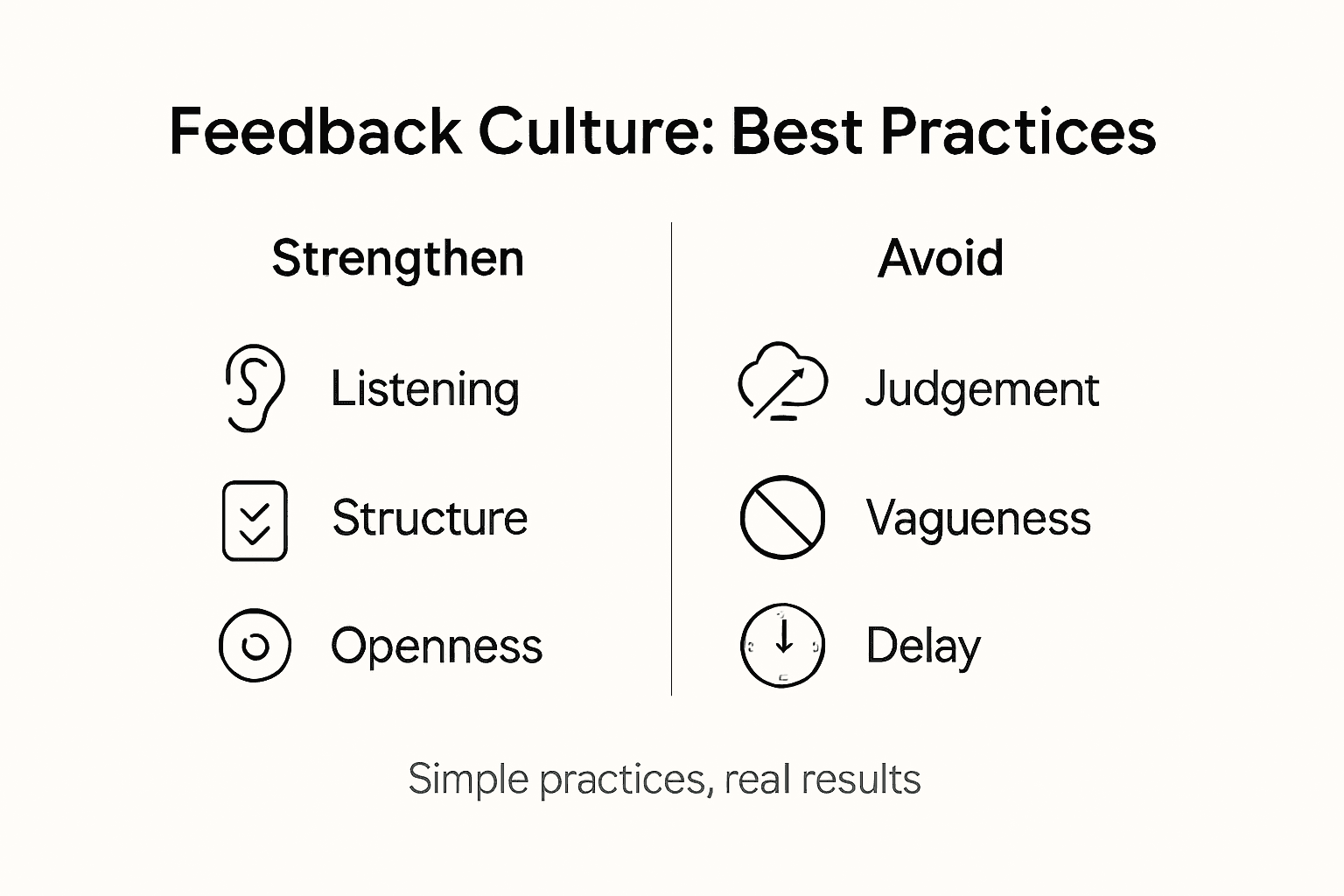
Cultural Principle: Integrate feedback as a core organizational value, not an annual administrative task.
Pro Culture Tip: Implement a monthly ‘feedback roundtable’ where team members rotate roles, practicing giving and receiving constructive input in a safe, structured environment to build collective communication skills.
Harness Feedback to Accelerate Your Entrepreneurial Growth
Understanding the vital role of feedback is the first step toward transforming your business. This article highlights the challenges many entrepreneurs face such as emotional defensiveness, vague communication, and missed opportunities due to poorly timed or delivered feedback. If you want to overcome these obstacles and create a true culture of constructive feedback, you need more than theory— you need action, clear frameworks, and a supportive community.
At Nomad Excel, we specialize in helping entrepreneurs and teams like you build this capability through our immersive Entrepreneurship Archives bootcamps and tailored company retreats. Our programs provide structured mentorship, practical strategies, and ongoing peer support designed to help you implement the exact feedback systems that drive real business growth. Why wait to turn feedback from a communication challenge into your greatest growth asset?
Discover how to unlock the power of feedback and accelerate your progress today with Nomad Excel. Visit us now at Nomad Excel to explore how our proven frameworks and community can support your journey. For inspiring stories and insights, check out our Inspiration Archives and start transforming feedback into action.
Frequently Asked Questions
What is the importance of feedback in business growth?
Feedback is vital for business growth as it provides insights into performance, identifies strengths and weaknesses, and guides strategic improvement. It helps organizations adapt, innovate, and enhance operational effectiveness.
What types of feedback should entrepreneurs consider?
Entrepreneurs should consider customer feedback, mentor feedback, peer feedback, quantitative feedback, and qualitative feedback. Each type offers unique insights that can influence business strategies and growth trajectories.
How can feedback accelerate innovation in a business?
Feedback accelerates innovation by enabling rapid iteration, optimizing performance, mitigating risks, and encouraging creative solutions through external perspectives. It fosters a culture of continuous learning and adaptability.
What are common mistakes to avoid when giving feedback?
Common mistakes in giving feedback include being vague, delivering it too late, personalizing criticism, and failing to follow up. Addressing these issues can enhance the effectiveness and constructiveness of feedback interactions.
Recommended
- Business Growth Strategy Workflow for Fast Results
- Personal Business Growth: Complete Guide for Entrepreneurs – Nomad Excel – Your Entrepreneurial Adventure Starts Here
- Business Growth in 2025: The Essential Guide – Nomad Excel – Your Entrepreneurial Adventure Starts Here
- 7 Essential Execution Tips for Entrepreneurs Worldwide
- Блог компании Aiday | 4 ÑпоÑоба повыÑить уровень вовлеченноÑти в
Comments are closed.