
Why Business Networking Matters for Growth and Success
Nearly half of American professionals believe their biggest career advances came from networking rather than formal job applications. Building strong business relationships goes well beyond collecting contacts and can have a profound impact on your professional journey. Understanding business networking is essential for uncovering new opportunities, accessing insider knowledge, and growing both careers and businesses in a competitive market.
Table of Contents
- Defining Business Networking And Its Importance
- Types Of Networks And Key Differences
- Core Benefits For Entrepreneurs And Teams
- Effective Networking Strategies That Work
- Common Pitfalls And How To Avoid Them
Key Takeaways
| Point | Details |
|---|---|
| Importance of Networking | Business networking is a strategic approach to building professional relationships that drives career and entrepreneurial growth. |
| Types of Networks | Understanding operational, personal, and strategic networks aids in intentional relationship-building and enhances networking effectiveness. |
| Networking Benefits | Robust networking provides access to resources, knowledge, partnerships, and market insights that are vital for business success. |
| Effective Strategies | Successful networking requires authentic relationship building, digital engagement, and consistent follow-up for meaningful connections. |
Defining Business Networking and Its Importance
Business networking is more than just exchanging business cards or collecting contacts. It represents a strategic approach to building professional relationships that can dramatically accelerate your career and entrepreneurial growth. Research indicates that networking is a crucial management skill fundamental to business success, with significant implications for individual professional development.
At its core, networking involves establishing meaningful connections with professionals, peers, and potential collaborators within and across industries. Professional networking can be defined as the deliberate process of creating and nurturing relationships to exchange information, support, and opportunities. These connections are not merely transactional but serve as vital conduits for knowledge sharing, mentorship, and potential business growth.
Successful networking requires several key skills and approaches:
- Active listening and genuine curiosity about others
- Consistent and authentic communication
- Willingness to provide value before seeking personal gains
- Strategic relationship building across diverse professional circles
- Digital and in-person engagement techniques
For entrepreneurs and professionals, networking transcends traditional sales or job hunting. It becomes a powerful ecosystem of mutual support, where knowledge flows, opportunities emerge, and collaborative potential gets unlocked. By cultivating a robust professional network, individuals can gain insights, discover innovative solutions, and create pathways that might otherwise remain invisible.
Types of Networks and Key Differences
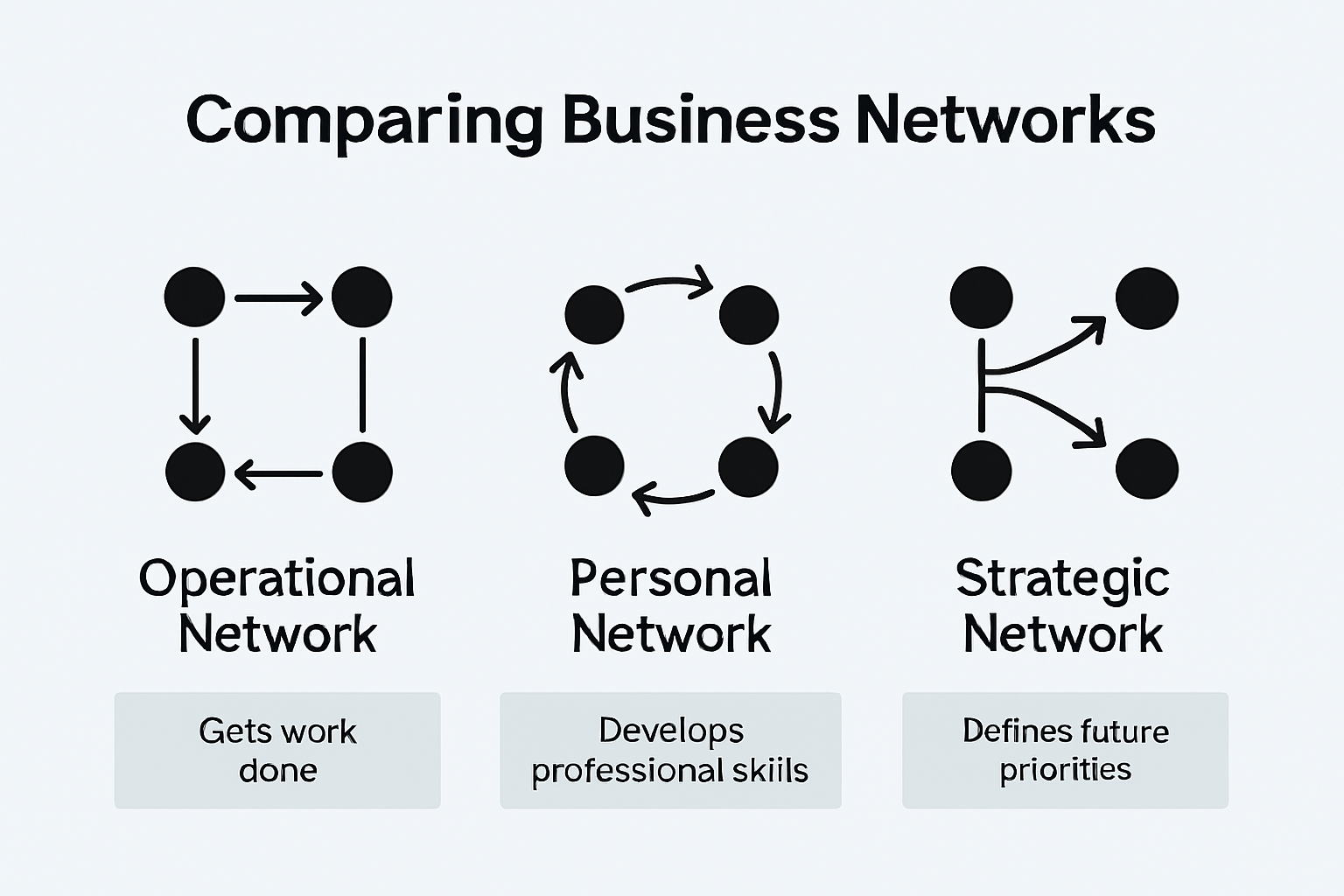
Business networks are not monolithic but comprise distinct types that serve different strategic purposes. Researchers have identified several critical network categories that professionals can leverage for career and business growth, each offering unique advantages and opportunities for connection.
Three primary network types emerge as particularly significant:
Operational Networks: These focus on day-to-day work interactions, connecting individuals within their immediate professional ecosystem. They typically include colleagues, direct team members, and internal stakeholders who collaborate to achieve immediate business objectives.
Personal Networks: Composed of relationships built beyond immediate work contexts, these networks include mentors, former colleagues, industry peers, and connections made through professional associations or social interactions.
Strategic Networks: These forward-looking networks are designed to create future opportunities, often spanning multiple industries and focusing on long-term professional development and potential collaborative ventures.
Professional networking platforms offer diverse engagement methods that enable individuals to cultivate these network types through both formal and informal channels. Formal networking might occur through structured industry conferences, professional association events, and organized meetups, while informal networking happens through digital platforms, social interactions, and spontaneous professional connections.
Understanding these network distinctions allows professionals to be intentional about relationship building. Each network type requires different approaches: operational networks demand efficiency and reliability, personal networks thrive on genuine connection and mutual support, and strategic networks benefit from visionary thinking and proactive relationship management.
Core Benefits for Entrepreneurs and Teams
Business networking represents a powerful catalyst for entrepreneurial growth, offering far more than simple social interactions. Entrepreneurs gain critical resources and opportunities through strategic connections that can dramatically accelerate business development and personal professional trajectories.
The core benefits of robust networking extend across multiple dimensions of business performance:
- Resource Acquisition: Access to funding, mentorship, and professional advice
- Knowledge Expansion: Insights into industry trends and emerging technologies
- Partnership Opportunities: Potential collaborations with complementary businesses
- Market Intelligence: Real-time understanding of competitive landscapes
- Customer Development: Direct pathways to potential client connections
Strategic networking platforms enable entrepreneurs to transcend traditional business boundaries, creating ecosystems of mutual support and collaborative potential. Teams that prioritize networking can develop more adaptive, resilient organizational structures that respond quickly to market changes and emerging opportunities.

Beyond immediate business outcomes, networking cultivates intangible yet critical professional assets. Entrepreneurs who invest time in building genuine relationships develop enhanced communication skills, emotional intelligence, and a broader perspective on industry dynamics. These soft skills often become differentiating factors in competitive markets, transforming networking from a tactical activity into a strategic advantage for long-term professional success.
Effective Networking Strategies That Work
Strategic networking requires intentional approaches that go beyond random social interactions. Professional networking involves systematic methods for building meaningful connections that can transform business opportunities and personal career trajectories.
Key strategies for effective networking include:
- Targeted Event Participation: Attend industry conferences, workshops, and professional meetups aligned with your specific business goals
- Digital Networking: Leverage professional platforms like LinkedIn to connect with industry peers and thought leaders
- Authentic Relationship Building: Focus on creating genuine connections rather than transactional interactions
- Consistent Follow-up: Maintain relationships through periodic check-ins, shared insights, and mutual support
- Value-First Approach: Offer assistance, insights, or introductions before seeking personal gains
Finding common ground with potential professional contacts becomes easier when entrepreneurs approach networking with curiosity and genuine interest. Successful networkers understand that each interaction is an opportunity to learn, grow, and potentially create mutually beneficial relationships.
The most powerful networking strategies transcend traditional contact exchange. They involve active listening, demonstrating authentic interest in others’ professional journeys, and creating a reputation as a connector who adds value to professional ecosystems. By approaching networking as a collaborative process of mutual growth, entrepreneurs can transform casual interactions into strategic opportunities for business expansion and personal development.
Common Pitfalls and How to Avoid Them
Professional networking requires nuanced strategies to navigate potential obstacles that can derail meaningful connections. Effective relationship building demands careful attention to avoid common mistakes that can undermine networking efforts.
Most frequent networking pitfalls include:
- Transactional Mindset: Treating connections as purely instrumental exchanges
- Inconsistent Communication: Reaching out only when personal needs arise
- Lack of Authenticity: Presenting an overly polished or inauthentic persona
- Poor Follow-up: Failing to maintain connections after initial interactions
- Network Neglect: Not investing time in relationship cultivation
Professional networks require consistent nurturing to generate meaningful opportunities and sustained growth. Successful networkers understand that genuine connections are built through mutual respect, consistent engagement, and a willingness to provide value without immediate expectation of return.
To overcome these challenges, entrepreneurs must approach networking as a long-term investment in relationships. This means developing genuine curiosity about others, listening actively, offering support without keeping score, and maintaining a spirit of generosity. By shifting from a transactional to a relational perspective, professionals can transform superficial interactions into powerful, supportive professional ecosystems that drive personal and business growth.
Unlock the Power of Business Networking with Nomad Excel
The article highlights the critical challenge entrepreneurs and professionals face: building authentic and strategic networks that fuel growth and open doors to new opportunities. If you find yourself navigating the pitfalls of transactional connections or struggling to maintain consistent, value-driven relationships, you are not alone. Successful business networking demands intentionality, active engagement, and a supportive community that sustains momentum beyond simple introductions.
Nomad Excel is designed to solve this exact challenge by offering immersive entrepreneurship bootcamps and company retreats where networking becomes natural, strategic, and impactful. Through our in-person programs, participants gain expert mentorship, practical frameworks, and a thriving community focused on clarity, execution, and real-world results. Whether you are an aspiring founder seeking to launch your idea or a team aiming to strengthen communication and innovate together, our collaborative environment accelerates your ability to build meaningful professional connections.
Discover how to transform your networking efforts into a powerful growth engine by joining one of our Entrepreneurship Bootcamps or exploring custom Company Retreats and Bootcamps. Take the step today to move beyond surface-level interactions and build a vibrant network that supports your vision and business success. Visit us at Nomad Excel and start creating connections that last.
Frequently Asked Questions
What is business networking?
Business networking is the process of building and nurturing professional relationships to exchange information, support, and opportunities that contribute to career and entrepreneurial growth.
Why is networking important for success in business?
Networking is crucial for business success as it helps individuals gain access to valuable resources, knowledge about industry trends, potential partnerships, and insights into the competitive landscape.
What are the different types of business networks?
The main types of business networks include operational networks, personal networks, and strategic networks, each serving distinct purposes in professional relationship building and growth.
How can I improve my networking skills?
Improving networking skills involves attending targeted events, engaging in digital networking platforms like LinkedIn, focusing on authentic relationship building, maintaining consistent communication, and adopting a value-first approach to interactions.
Recommended
- Role of Networking in Entrepreneurship: Essential Guide – Nomad Excel – Your Entrepreneurial Adventure Starts Here
- Networking for Entrepreneurs: Complete Guide to Success
- Personal Business Growth: Complete Guide for Entrepreneurs – Nomad Excel – Your Entrepreneurial Adventure Starts Here
- Business Growth Strategy Workflow for Fast Results
Comments are closed.