
Networking for Entrepreneurs: Complete Guide to Success
More than 80 percent of american entrepreneurs credit their network as a critical driver of business growth. In today’s competitive startup world, simply having a good idea is not enough. Building the right connections can open doors to funding, insights, and new opportunities that may otherwise stay out of reach. This guide unpacks what entrepreneurial networking really means and shows how american business owners can harness authentic relationships for lasting success.
Table of Contents
- Defining Networking For Entrepreneurs
- Online Vs. Offline Networking Strategies
- Building An Effective Entrepreneurial Network
- Leveraging Community And Mentorship Opportunities
- Overcoming Common Networking Challenges
Key Takeaways
| Point | Details |
|---|---|
| Importance of Networking | Networking is essential for entrepreneurs, helping them to build professional relationships that lead to business growth and resource mobilization. |
| Hybrid Networking Approach | Combining online and offline networking maximizes opportunities and enhances connectivity in a diverse professional landscape. |
| Building Intentional Relationships | Successful networking involves consciously cultivating meaningful relationships rather than merely accumulating contacts. |
| Overcoming Networking Challenges | Entrepreneurs should reframe their mindset about networking and develop strategies to address personal hurdles, such as social anxiety and fear of rejection. |
Defining Networking for Entrepreneurs
Networking for entrepreneurs transcends traditional social interactions – it’s a strategic process of building and nurturing professional relationships that create opportunities for business growth and innovation. According to research from Oxford Academic, entrepreneurship is fundamentally an interactive and social endeavor where networking becomes integral to generating business opportunities and mobilizing critical resources.
At its core, entrepreneurial networking involves purposefully connecting with individuals, organizations, and communities that can provide knowledge, support, and potential collaborations. Research analyzing intellectual and social capital reveals that successful entrepreneurs leverage their networks to recognize emerging business opportunities and access external knowledge systems. ArXiv Research emphasizes that an entrepreneur’s ability to build meaningful connections directly correlates with their capacity to identify and capitalize on innovative business prospects.
Effective networking for entrepreneurs encompasses several strategic dimensions:
- Strategic Relationship Building: Intentionally developing connections with mentors, peers, potential investors, and industry experts
- Knowledge Exchange: Creating channels for sharing insights, learning from others’ experiences, and staying updated on industry trends
- Resource Mobilization: Accessing funding, talent, technology, and market intelligence through professional networks
- Opportunity Recognition: Expanding perspective and identifying potential business opportunities through diverse interactions
While networking might seem intimidating, it is a learnable skill that requires consistent practice, genuine curiosity, and a mindset of mutual value creation. By approaching networking as a collaborative journey rather than a transactional exchange, entrepreneurs can transform professional connections into powerful catalysts for business growth and personal development.
Online vs. Offline Networking Strategies
Entrepreneurs today face a dynamic networking landscape that blends both digital and in-person interaction strategies. Oxford Academic research highlights the critical importance of understanding how online and offline networking channels can complement and enhance each other, offering entrepreneurs multiple pathways to build meaningful professional connections.
In the digital realm, online networking provides unprecedented accessibility and global reach. Platforms like LinkedIn, Twitter, and specialized industry forums enable entrepreneurs to connect with professionals across geographic boundaries, participate in virtual conferences, and engage in targeted discussions. Conversely, offline networking maintains its irreplaceable value through in-person events, industry conferences, local meetups, and face-to-face interactions that create deeper, more authentic relationships. Science Direct emphasizes the strategic potential of integrating online-to-offline (O2O) platforms, suggesting that entrepreneurs who skillfully combine both approaches can significantly improve their networking effectiveness.
Key strategies for successful hybrid networking include:
- Digital Presence Optimization: Maintaining professional and engaging online profiles
- Strategic Social Media Engagement: Sharing valuable content, commenting thoughtfully, and participating in industry discussions
- Virtual Event Participation: Attending webinars, online conferences, and digital networking sessions
- Local Networking Events: Attending industry meetups, conferences, and professional association gatherings
- Cross-Channel Consistency: Ensuring your personal brand and messaging remain cohesive across online and offline platforms
The most successful entrepreneurs recognize that online and offline networking are not competing strategies, but complementary approaches.
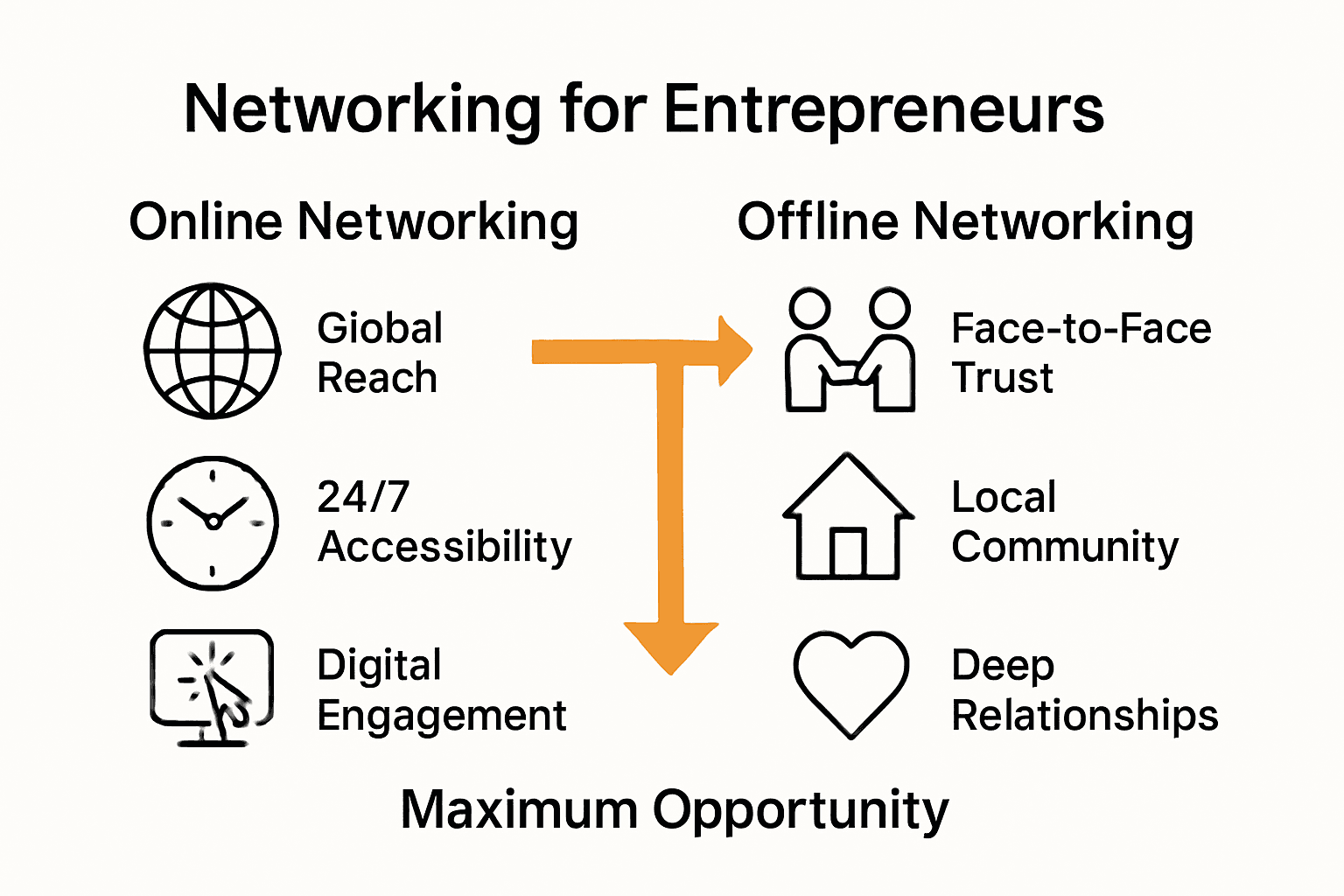 By developing a nuanced, integrated networking strategy that leverages the strengths of both digital and in-person interactions, entrepreneurs can expand their professional networks, access diverse opportunities, and create meaningful connections that drive business growth.

Building an Effective Entrepreneurial Network
Building a robust entrepreneurial network requires strategic thinking and intentional relationship development. Science Direct research reveals that the content and quality of an entrepreneur’s network directly impacts business performance, emphasizing that network diversity and resource variety are critical factors in achieving sustainable success.
Entrepreneurs must approach network building as a comprehensive strategy that goes beyond simply collecting contacts. ArXiv Research highlights the importance of collaborative networking, demonstrating that entrepreneurs with diverse, interconnected networks can significantly enhance their business opportunities, particularly those who leverage connections across different geographic and professional contexts. This means cultivating relationships that provide varied perspectives, resources, and potential collaboration opportunities.
Key strategies for building an effective entrepreneurial network include:
Intentional Relationship Cultivation: Actively seek connections with diverse professionals who offer unique insights and capabilities
Quality Over Quantity: Focus on developing meaningful, mutually beneficial relationships rather than accumulating superficial contacts
Cross-Domain Networking: Connect with professionals from different industries, backgrounds, and expertise levels
Regular Engagement: Consistently maintain and nurture professional relationships through periodic communication and value exchange
Reciprocal Value Creation: Approach networking with a mindset of offering support and resources, not just seeking personal gain
Successful network building is an ongoing process that requires patience, authenticity, and a genuine commitment to professional growth. By developing a strategic approach to networking that prioritizes depth, diversity, and mutual value, entrepreneurs can create a powerful support system that drives innovation, opens new opportunities, and provides critical resources for long-term business success.
Role of Networking in Entrepreneurship Guide offers additional insights into developing a comprehensive networking strategy that can transform your entrepreneurial journey.
Leveraging Community and Mentorship Opportunities
Entrepreneurs can dramatically accelerate their growth by strategically engaging with supportive communities and mentorship networks. ArXiv Research reveals that educational ecosystems play a critical role in shaping entrepreneurial success, demonstrating how institutional networks can provide foundational support for emerging business leaders.
Mentorship and community engagement represent powerful catalysts for entrepreneurial development. University Repository highlights that effective networking goes beyond simple connections, emphasizing the importance of shared values and meaningful interactions. Entrepreneurs who cultivate deep, authentic relationships within their professional communities gain access to invaluable insights, decision-making support, and opportunities for personal branding.
Key strategies for leveraging community and mentorship opportunities include:
- Targeted Mentor Selection: Identify mentors with specific expertise relevant to your entrepreneurial goals
- Active Community Participation: Engage consistently in professional groups, forums, and networking events
- Reciprocal Learning: Approach mentorship as a two-way knowledge exchange
- Diverse Network Building: Connect with professionals from varied backgrounds and industries
- Continuous Skill Development: Use community resources for ongoing personal and professional growth
Successful entrepreneurs understand that community and mentorship are not passive experiences but active investments in their professional journey. Essential Startup Mentorship Benefits offers deeper insights into how strategic mentorship can transform entrepreneurial trajectories, providing entrepreneurs with the guidance, support, and perspective necessary to navigate complex business landscapes and accelerate their growth.
Overcoming Common Networking Challenges
ArXiv Research highlights a critical insight about entrepreneurial networking: success hinges not just on making connections, but on strategically accessing and leveraging external knowledge through social networks. Entrepreneurs frequently encounter significant barriers that can impede their networking effectiveness, ranging from personal insecurities to structural limitations in their professional environments.
Introversion, social anxiety, and fear of rejection represent substantial psychological hurdles for many entrepreneurs attempting to expand their professional networks. Science Direct research underscores that network resource variety is fundamental to business performance, meaning entrepreneurs must develop strategies to overcome these internal obstacles and create meaningful professional connections.
Key strategies for addressing common networking challenges include:
- Reframe Networking Mindset: View networking as mutual value exchange, not transactional interaction
- Start Small: Begin with low-pressure networking environments like online forums or local meetups
- Develop Genuine Curiosity: Focus on learning about others rather than self-promotion
- Prepare Conversation Starters: Create flexible, open-ended questions that invite meaningful dialogue
- Practice Active Listening: Demonstrate genuine interest in others’ professional experiences
- Follow Up Consistently: Transform initial interactions into sustainable professional relationships
Successful networking requires patience, authenticity, and a willingness to step outside comfort zones. By understanding that networking challenges are universal and approaching them with strategic intentionality, entrepreneurs can progressively build confidence and create powerful professional connections. Role of Networking in Entrepreneurship Guide provides additional insights for entrepreneurs seeking to refine their networking approach and overcome persistent challenges.
Accelerate Your Networking Success with Support from Nomad Excel
Building and leveraging a powerful entrepreneurial network is essential but often challenging. This article highlights common pain points like overcoming networking anxiety, accessing valuable mentorship, and creating meaningful connections that truly fuel business growth. If you are ready to move past these hurdles and develop strategic relationships with clarity and confidence, Nomad Excel offers immersive opportunities designed exactly for entrepreneurs like you.
Our Entrepreneurship Archives provide rich insights, while our experiential bootcamps combine hands-on learning, expert mentorship, and a supportive community to sharpen your networking skills and accelerate your business success. Don’t wait to transform your network and unlock lasting opportunities. Discover how you can build authentic, growth-driven connections right now at Nomad Excel. Your entrepreneurial adventure starts here.
Frequently Asked Questions
What is networking for entrepreneurs?
Networking for entrepreneurs is a strategic process of building and nurturing professional relationships that create opportunities for business growth and innovation. It involves connecting with individuals and organizations that can provide knowledge, support, and potential collaborations.
How can entrepreneurs effectively balance online and offline networking?
Entrepreneurs can balance online and offline networking by maintaining a strong digital presence, engaging on social media, attending virtual events, and participating in local meetups. Integrating both approaches enhances networking effectiveness and expands professional connections.
What are some key strategies for building an effective entrepreneurial network?
Key strategies include intentional relationship cultivation, focusing on quality over quantity, cross-domain networking, regular engagement, and creating reciprocal value in professional relationships. This helps to create a diverse and resourceful network.
How can I overcome networking challenges as an entrepreneur?
To overcome networking challenges, start by reframing your mindset to view networking as mutual value exchange, begin with low-pressure environments, develop genuine curiosity, prepare conversation starters, practice active listening, and follow up to maintain connections.
Recommended
- Role of Networking in Entrepreneurship: Essential Guide – Nomad Excel – Your Entrepreneurial Adventure Starts Here
- Personal Business Growth: Complete Guide for Entrepreneurs – Nomad Excel – Your Entrepreneurial Adventure Starts Here
- Role of Mentorship in Entrepreneurship: Complete Guide – Nomad Excel – Your Entrepreneurial Adventure Starts Here
- What Is Entrepreneurial Community? Complete Breakdown – Nomad Excel – Your Entrepreneurial Adventure Starts Here
Comments are closed.