
What Is Entrepreneurial Community? Complete Breakdown
Did you know that nearly 90 percent of successful startups credit community support as their top growth factor? Entrepreneurial communities turn isolated business ideas into thriving collaborations, giving entrepreneurs access to shared knowledge, guidance, and vital resources. These supportive networks matter because they spark innovation and unlock opportunities that would be out of reach alone. By understanding how these communities work, you can tap into the power of connection and multiply your own chances for lasting business success.
Table of Contents
- Defining Entrepreneurial Community Concepts
- Types and Models of Entrepreneurial Communities
- Core Characteristics and Essential Functions
- Roles, Benefits, and Member Responsibilities
- Common Pitfalls and Success Factors
Key Takeaways
| Point | Details |
|---|---|
| Entrepreneurial Communities as Ecosystems | These communities are crucial for collaboration, resource sharing, and individual growth, transforming traditional business interactions into supportive networks. |
| Diverse Community Models | Three primary models—salary-substitute firms, lifestyle firms, and entrepreneurial firms—offer distinct approaches to business, each reflecting varying motivations and growth strategies. |
| Key Functions and Roles | Entrepreneurial networks provide critical resources through functions like resource mobilization and knowledge sharing, with members fulfilling roles of knowledge generators, resource connectors, and mentors. |
| Navigating Success and Challenges | Successful communities prioritize authentic relationships, continuous learning, and adaptability while avoiding pitfalls such as ineffective networking and knowledge silos. |
Defining Entrepreneurial Community Concepts
Entrepreneurial communities represent dynamic social ecosystems where innovative individuals collaborate, share resources, and collectively advance business opportunities. According to mediatum, these communities are deeply embedded in local structures, emphasizing community orientation and active participation.
At its core, an entrepreneurial community functions as a supportive network that transcends traditional business interactions. en.wikipedia.org highlights that these networks are sophisticated social organizations designed to provide critical resources for launching and improving entrepreneurial projects. The key distinguishing factor is the emphasis on human resources and collaborative leadership.
These communities typically manifest through several interconnected characteristics:
- Shared learning and knowledge exchange
- Mutual professional support
By fostering an environment of trust, open communication, and collective growth, entrepreneurial communities transform individual endeavors into collaborative journeys. The Founder Journey Map: Navigating the Startup Phase provides additional insights into how these networks can accelerate entrepreneurial success.
Understanding entrepreneurial communities means recognizing them as living, breathing ecosystems where connections matter more than competitive isolation. They represent not just professional networks, but platforms for personal transformation, skill development, and collective achievement.
Types and Models of Entrepreneurial Communities
Entrepreneurial communities emerge in diverse configurations, each with unique characteristics and strategic objectives. According to jackmwilson.net, these ventures can be categorized into three fundamental models: salary-substitute firms, lifestyle firms, and entrepreneurial firms.
en.wikipedia.org introduces another compelling model: innovation districts. These urban ecosystems are deliberately designed to attract entrepreneurs, startups, and business incubators, creating concentrated zones of collaboration and knowledge exchange. Such districts represent a structured approach to community building, where physical proximity becomes a catalyst for entrepreneurial synergy.
The three primary entrepreneurial community models offer distinct approaches to business development:
Here’s a summary of the three main entrepreneurial community models:
| Model Type | Core Focus | Typical Characteristics | Growth Orientation |
|---|---|---|---|
| Salary-Substitute Firms | Income replacement | Small scale Stability prioritized | Limited, stable |
| Lifestyle Firms | Personal passion & flexibility | Aligned with interests Work-life balance | Moderate, personal fulfillment |
| Entrepreneurial Firms | Scalability & innovation | Growth-driven Market impact Investment-seeking | High, transformative |
- Salary-Substitute Firms
- Focus on generating income equivalent to traditional employment
- Typically smaller in scale
- Prioritize stability over rapid growth
- Lifestyle Firms
- Designed around personal passion and work-life balance
- Often aligned with founder’s individual interests
- Emphasize flexibility and personal fulfillment
- Entrepreneurial Firms
- Driven by scalability and significant market impact
- Seek substantial growth and potential investment
- Prioritize innovation and transformative potential
Understanding Unit Economics: A Key to Entrepreneurial Success can provide deeper insights into how these different community models approach business sustainability and growth strategies.
Each model represents a unique approach to entrepreneurship, reflecting the diverse motivations and strategies of modern business creators. The key is recognizing that entrepreneurial communities are not monolithic but adaptive ecosystems that can transform based on their members’ goals, resources, and collective vision.

Core Characteristics and Essential Functions
Entrepreneurial networks are complex social structures that extend far beyond simple professional connections. According to en.wikipedia.org, these networks are characterized by their ability to provide diverse resources, foster leadership, and differentiate businesses through strategic social connections.
en.wikipedia.org introduces the triple helix model, which illuminates the critical interactions between academia, industry, and government in driving economic and social development. This framework underscores how entrepreneurial communities function as interconnected ecosystems rather than isolated entities.
The essential functions of entrepreneurial communities can be distilled into several key dimensions:
- Resource Mobilization
- Connecting members with financial, intellectual, and social capital
- Facilitating access to mentorship and funding opportunities
- Knowledge Sharing
- Creating platforms for skill transfer
- Enabling cross-pollination of ideas and expertise
- Collaborative Innovation
- Encouraging collective problem-solving
- Supporting experimental and adaptive business approaches
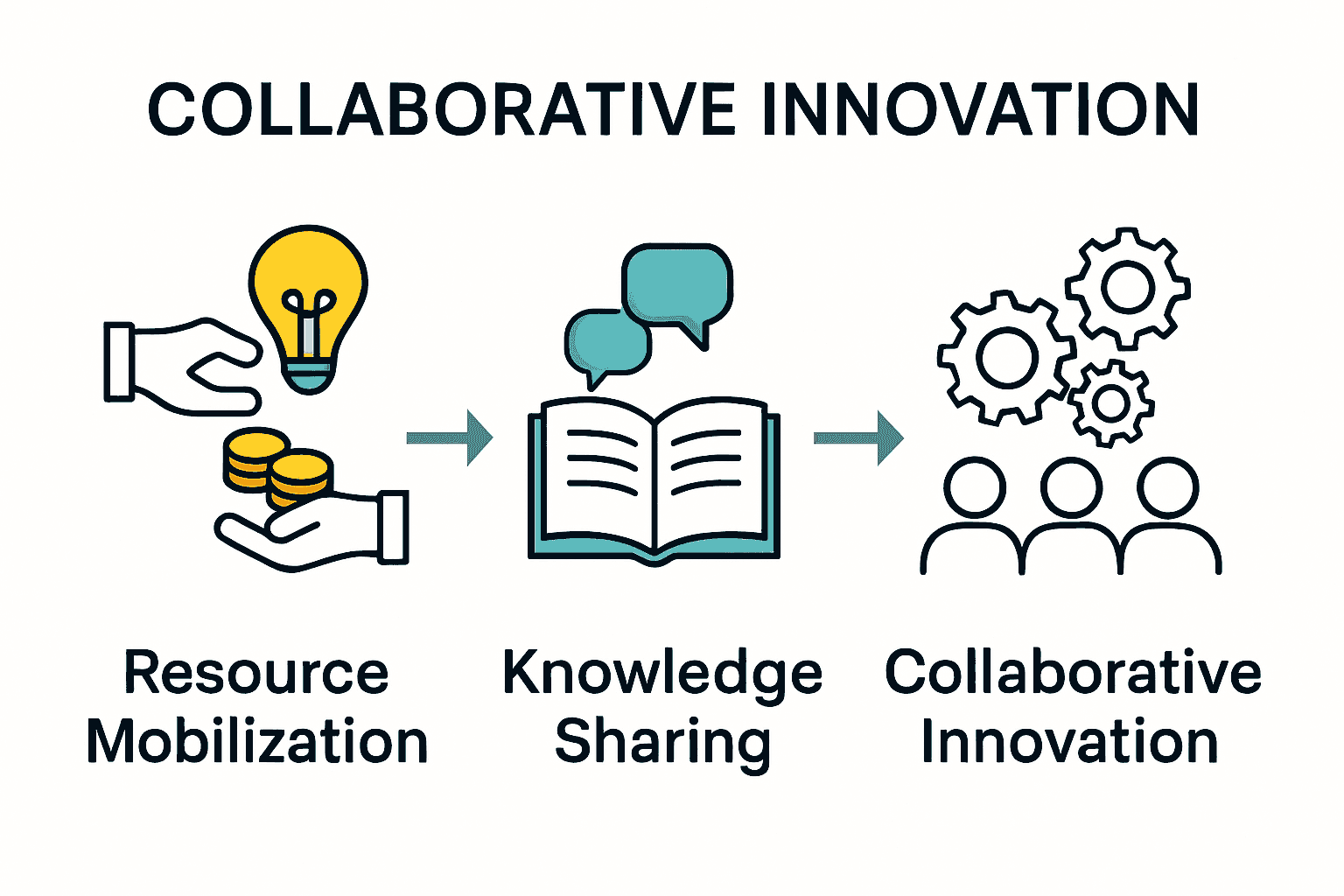
The Founder Journey Map: Navigating the Startup Phase provides additional context on how these functions translate into practical entrepreneurial growth strategies.
Ultimately, entrepreneurial communities are living networks that thrive on mutual support, continuous learning, and collective advancement. They transform individual potential into collaborative success, creating environments where innovation can flourish beyond traditional organizational boundaries.
Roles, Benefits, and Member Responsibilities
Entrepreneurial communities represent intricate ecosystems with diverse member roles and interdependent responsibilities. According to en.wikipedia.org, these networks typically include professionals like lawyers, scientists, and investors who collaborate to provide comprehensive resources and support for business success.
en.wikipedia.org highlights that effective entrepreneurial communities are built on four critical elements: membership, influence, need fulfillment, and shared emotional connections. These principles transform individual participants from passive members to active contributors in a dynamic collective environment.
The multifaceted roles within entrepreneurial communities can be categorized into several key archetypes:
- Knowledge Generators
- Researchers and thought leaders
- Create and share innovative insights
- Drive intellectual capital development
- Resource Connectors
- Facilitate networking opportunities
- Link potential investors with entrepreneurs
- Provide strategic introductions
- Mentorship Providers
- Share practical experiences
- Offer guidance and constructive feedback
- Help navigate complex business challenges
- Skill Amplifiers
- Collaborate on problem-solving
- Cross-train and skill-share
- Enhance collective capabilities
Understanding Unit Economics: A Key to Entrepreneurial Success provides additional context on how these roles contribute to sustainable business growth.
The true power of entrepreneurial communities lies not just in individual achievements, but in the synergistic potential created through genuine collaboration, mutual support, and a shared commitment to collective advancement.
Common Pitfalls and Success Factors
Entrepreneurial communities navigate a complex landscape where success and failure are often separated by nuanced factors. According to arxiv.org, access to external knowledge through social networks is fundamental for recognizing new business opportunities, highlighting the critical importance of social capital in entrepreneurial ecosystems.
arxiv.org reveals that higher education institutions play a significant role in shaping startup ecosystems, with elite institutions having substantial local impact on entrepreneurial networks. This insight underscores the importance of strategic knowledge infrastructure in community development.
Common pitfalls that can derail entrepreneurial communities include:
- Ineffective Networking
- Superficial connections
- Lack of genuine relationship building
- Transactional rather than collaborative approach
- Knowledge Silos
- Restricted information sharing
- Competitive rather than collaborative mindset
- Limited cross-disciplinary interaction
- Scalability Challenges
- Inability to manage community growth
- Inconsistent communication channels
- Dilution of core community values
Success factors that distinguish thriving entrepreneurial communities involve:
- Cultivating authentic relationships
- Maintaining clear communication protocols
- Encouraging continuous learning and adaptation
The Founder Journey Map: Navigating the Startup Phase provides additional strategic insights into overcoming these challenges.
Ultimately, successful entrepreneurial communities are not just about avoiding pitfalls but creating resilient, adaptive ecosystems that transform individual potential into collective achievement. The most powerful communities view challenges as opportunities for collective growth and innovation.
Unlock the Power of Entrepreneurial Communities with Nomad Excel
The article highlights a key challenge many entrepreneurs face: building authentic, supportive networks that go beyond superficial connections to fuel growth and innovation. Entrepreneurial communities thrive on trust, shared knowledge, and collaboration, yet many founders struggle to find the right environment for this transformative experience. If you aim to move past networking pitfalls and tap into genuine mentorship and resource-sharing, understanding and engaging with a true entrepreneurial community is essential.
At Nomad Excel, we bring these concepts to life through immersive programs designed to connect you with driven founders and expert mentors. Our Entrepreneurship Archives offer rich insights to deepen your understanding of community dynamics and growth strategies. Whether you are launching a startup or scaling your business, our hands-on bootcamps and retreats deliver step-by-step frameworks, daily accountability, and a supportive community that lasts far beyond the program.
Don’t let your entrepreneurial journey stall in isolation. Explore our Program Archives to find the perfect fit for your next leap. Visit Nomad Excel now and join a community where your vision gains clarity, your execution sharpens, and your network transforms into a powerful growth engine.
Frequently Asked Questions
What is an entrepreneurial community?
An entrepreneurial community is a dynamic social ecosystem where innovative individuals collaborate, share resources, and work together to advance business opportunities. It emphasizes community orientation and active participation among its members.
What are the key characteristics of entrepreneurial communities?
Entrepreneurial communities are characterized by shared learning, mutual professional support, trust, and open communication. They foster environments where individual endeavors are transformed into collaborative journeys.
What are the common types of entrepreneurial community models?
There are three main entrepreneurial community models: salary-substitute firms focused on income replacement, lifestyle firms aligned with personal passions and flexibility, and entrepreneurial firms aimed at scalability and innovation.
What roles do members play in an entrepreneurial community?
Members in an entrepreneurial community can take on various roles including knowledge generators, resource connectors, mentorship providers, and skill amplifiers. Each role contributes to the community’s overall support and growth, fostering a collaborative environment.
Comments are closed.