
Why Join Entrepreneur Communities: Growth Through Connection
More than 60 percent of American startup founders say their biggest breakthroughs came through connections and learning within entrepreneur communities. These networks are not just a perk—they are a driving force behind real innovation and shared business success. By exploring what makes entrepreneur communities work and debunking the myths surrounding them, you will see exactly how teamwork and knowledge-sharing shape the next generation of American business leaders.
Table of Contents
- Entrepreneur Communities Defined and Debunked
- Types of Entrepreneur Communities Worldwide
- Key Benefits for Startup Founders and Teams
- Mentorship, Accountability, and Skill Building
- Common Pitfalls and Smart Participation Strategies
Key Takeaways
| Point | Details |
|---|---|
| Entrepreneur Communities Support Growth | These communities provide structured networks that foster innovation, collaboration, and professional development among entrepreneurs. |
| Diverse Community Types Enhance Engagement | Different community structures, such as academic-driven or sector-specific networks, cater to unique entrepreneurial needs and promote effective learning. |
| Mentorship is Essential for Success | Targeted mentorship programs facilitate skill development and accountability, transforming potential into business success through personalized guidance. |
| Active Participation is Key | Engaging actively and building relationships within the community is crucial to maximizing benefits and avoiding isolation in the entrepreneurial journey. |
Entrepreneur Communities Defined and Debunked
Entrepreneur communities are strategic networks designed to intentionally support and cultivate entrepreneurial growth. Entrepreneurial communities actively create environments that foster innovation, collaboration, and professional development for aspiring and established business creators.
Contrary to common misconceptions, entrepreneur communities are far more nuanced than simple networking groups. Research reveals multiple myths about entrepreneurship that these communities help dispel. For instance, multiple studies have challenged traditional assumptions about what entrepreneurship actually entails, demonstrating that it goes well beyond starting a small business or requiring substantial upfront capital.
These communities typically provide comprehensive support through various mechanisms:
- Mentorship programs connecting experienced entrepreneurs with newcomers
- Collaborative workshops and skill-building sessions
- Access to shared resources and funding opportunities
- Peer accountability and emotional support networks
- Knowledge exchange platforms
Successful entrepreneur communities recognize that business growth is not just about individual skills, but about creating interconnected ecosystems where knowledge, resources, and opportunities flow seamlessly between members. They transform isolated entrepreneurial journeys into collaborative adventures, breaking down traditional barriers of competition and isolation.
Types of Entrepreneur Communities Worldwide
Entrepreneur communities come in diverse forms, adapting to unique regional needs and innovative approaches. Innovation districts represent one powerful model of entrepreneurial ecosystem development, creating integrated environments that attract startups, research institutions, and dynamic business incubators.
These communities span multiple structures and organizational approaches, each serving specific entrepreneurial objectives. Notable types include:
- Academic-Driven Communities: Student-led organizations like Junior Enterprises that provide hands-on business experience for university students
- Digital Networking Platforms: Online communities connecting entrepreneurs across geographic boundaries
- Local Ecosystem Hubs: Collaborative spaces supporting regional business development
- Sector-Specific Networks: Communities focused on particular industries like technology, social entrepreneurship, or sustainable business
- Startup Accelerator Communities: Structured programs providing mentorship, resources, and investment opportunities
Each community type offers unique advantages, from structured learning environments to flexible networking opportunities. Successful entrepreneur communities prioritize knowledge exchange, mutual support, and creating pathways for collaborative growth that transcend traditional business boundaries.
The most effective communities recognize that entrepreneurship is not a solitary journey but a collaborative adventure. They break down traditional barriers by creating interconnected ecosystems where ideas, resources, and opportunities flow seamlessly between members, transforming individual potential into collective achievement.
Key Benefits for Startup Founders and Teams
Entrepreneur communities provide transformative advantages for startup founders and teams, offering critical support beyond traditional business resources. Global entrepreneurship research projects consistently demonstrate that collaborative networks significantly enhance startup success rates and individual professional development.
The key benefits for startup founders and teams include:
- Strategic Networking
- Knowledge Acceleration
- Emotional Support and Resilience
- Resource Sharing
- Skill Development
- Accountability Mechanisms
- Potential Funding Connections
Collaborative Learning emerges as a fundamental advantage. Academic research networks like ERENET highlight how structured entrepreneurial communities create powerful learning environments that bridge theoretical knowledge with practical execution. These communities function as living ecosystems where founders can rapidly prototype ideas, receive immediate feedback, and iterate their strategies with unprecedented speed.

Beyond tangible resources, entrepreneur communities deliver intangible yet crucial psychological benefits. They transform the inherently challenging startup journey from a solitary struggle into a shared adventure, providing founders with a support system that understands their unique challenges, celebrates their victories, and offers genuine, experience-based guidance through inevitable obstacles.
Mentorship, Accountability, and Skill Building
Mentorship represents the cornerstone of entrepreneurial growth, providing structured guidance that transforms individual potential into tangible business success. Entrepreneurship training programs demonstrate how targeted mentorship can accelerate learning and development for aspiring business creators across multiple skill levels.
The core components of effective entrepreneurial mentorship include:
- One-on-one strategic guidance
- Personalized feedback mechanisms
- Performance accountability frameworks
- Skill gap identification
- Targeted learning interventions
- Real-world problem-solving strategies
- Emotional intelligence development
Accountability Systems play a critical role in transforming entrepreneurial potential into consistent performance. Organizational networks dedicated to enterprise promotion highlight how structured support systems create environments where entrepreneurs can systematically track progress, challenge assumptions, and maintain consistent momentum.
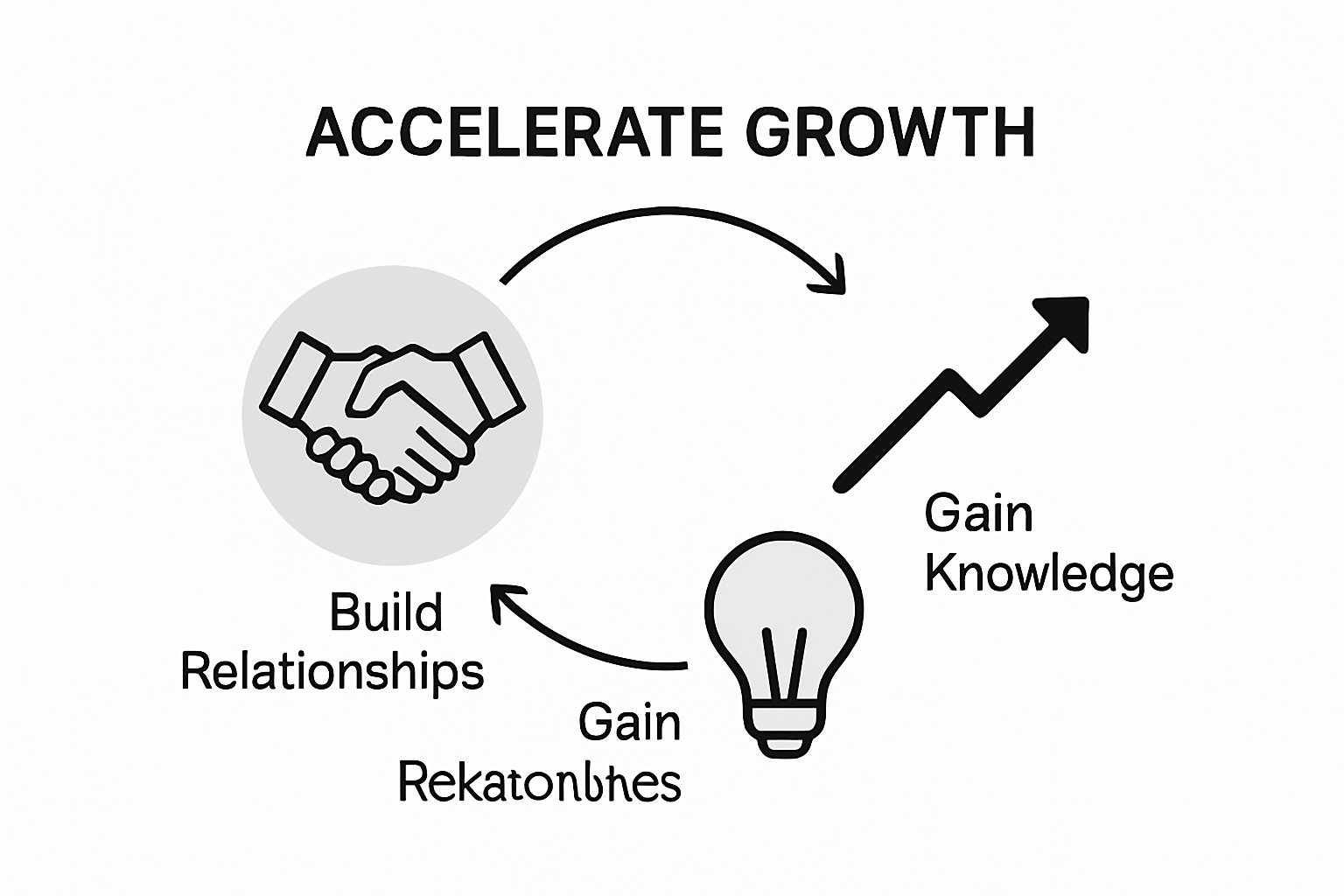
Ultimately, successful mentorship transcends traditional teaching models. It creates a dynamic ecosystem where experienced professionals guide emerging entrepreneurs through complex challenges, providing not just theoretical knowledge but practical wisdom gained through years of real-world experience. The most powerful mentorship relationships function as collaborative partnerships, where both mentor and mentee grow, learn, and evolve together in their entrepreneurial journeys.
Common Pitfalls and Smart Participation Strategies
Entrepreneur communities offer immense potential, but successful engagement requires strategic navigation. Entrepreneurial experts encourage proactively finding community connections to counteract the inherent isolation many founders experience during their business journeys.
Common participation pitfalls include:
- Passive membership without active engagement
- Expecting immediate returns without reciprocal contribution
- Focusing solely on personal gains
- Overlooking diverse perspectives
- Inconsistent participation
- Maintaining unrealistic expectations
- Neglecting professional boundaries
Relationship Building emerges as a critical strategy. Networking involves consistently interacting with multiple ecosystem actors, including potential clients, financial backers, and strategic partners. Successful community members approach interactions with genuine curiosity, openness to learning, and a commitment to mutual growth.
Smart participation means transforming community membership from a transactional experience into a collaborative journey. Entrepreneurs who view these networks as dynamic, reciprocal environments—where knowledge, resources, and support flow multidirectionally—are most likely to unlock transformative opportunities and sustainable professional relationships.
Unlock Growth Through Entrepreneur Communities with Nomad Excel
Entrepreneur communities create powerful environments for collaboration, mentorship, and accountability that turn solitary startup journeys into shared adventures. If you are ready to overcome isolation, accelerate your learning, and build deeper connections that fuel business success you are in the right place. Key concepts from the article like mentorship, strategic networking, and community support align perfectly with how Nomad Excel designs immersive programs.
Join one of our Entrepreneurship Archives bootcamps or company retreats to experience hands-on business building, expert guidance, and a network that stays with you well beyond the session. Our approach turns theory into action through daily accountability and real-world results. Visit Nomad Excel now to transform your entrepreneurial adventure and start growing faster through community.
Frequently Asked Questions
What are the main benefits of joining an entrepreneur community?
Joining an entrepreneur community provides strategic networking, knowledge acceleration, emotional support, resource sharing, skill development, accountability mechanisms, and potential funding connections, all of which enhance startup success and foster individual growth.
How does mentorship work within entrepreneur communities?
Mentorship in entrepreneur communities involves structured guidance through one-on-one interactions, personalized feedback, and skill gap identification. Experienced professionals help emerging entrepreneurs navigate challenges and accelerate their learning.
What types of entrepreneur communities exist?
Entrepreneur communities can take various forms, such as academic-driven communities, digital networking platforms, local ecosystem hubs, sector-specific networks, and startup accelerator communities. Each type offers unique advantages tailored to different entrepreneurial needs.
What strategies can I use to participate effectively in an entrepreneur community?
To participate effectively, focus on relationship building through consistent interaction, be open to diverse perspectives, actively contribute to the community, and maintain realistic expectations. Viewing the community as a collaborative environment is key to unlocking transformative opportunities.
Recommended
- How to Build Business Community for Entrepreneurs
- What Is Entrepreneurial Community? Complete Breakdown – Nomad Excel – Your Entrepreneurial Adventure Starts Here
- Why Community Supports Entrepreneurs’ Growth and Success
- Role of Networking in Entrepreneurship: Essential Guide – Nomad Excel – Your Entrepreneurial Adventure Starts Here
Comments are closed.