
The Essential Guide to Frameworks for Business Building
Over 60 percent of new american businesses close within their first five years, often because they lack a clear structure for decision-making and growth. Choosing the right business framework can turn overwhelming complexity into manageable steps and strategic actions. This guide breaks down the most effective frameworks, showing how the right approach helps entrepreneurs organize ideas, manage risks, and lay a strong foundation for sustained success.
Table of Contents
- Defining Frameworks For Business Building
- Core Types And Popular Methodologies
- Key Components And Success Factors
- Steps For Effective Implementation
- Pitfalls To Avoid In Business Frameworks
Key Takeaways
| Point | Details |
|---|---|
| Importance of Business Frameworks | Business frameworks are essential tools that help entrepreneurs transform abstract ideas into actionable plans for success. |
| Core Components of Effective Frameworks | Successful frameworks include clear objectives, comprehensive analysis, performance metrics, and adaptability to navigate market changes. |
| Flexibility in Implementation | Entrepreneurs should treat frameworks as dynamic tools that allow for strategic adjustments rather than rigid templates. |
| Awareness of Pitfalls | Key pitfalls include lack of clear objectives and continuous modification, which can indicate a weak framework that hinders decision-making. |
Defining Frameworks for Business Building
A business framework is a strategic tool that transforms complex entrepreneurial challenges into organized, actionable processes. According to Bacoe, a framework represents “a structure that organizes a set of related artifacts, showing their relationships and providing a comprehensive perspective on a subject area.†In essence, these frameworks serve as navigational maps for entrepreneurs, helping them structure their thinking and approach toward building successful ventures.
Entrepreneurial frameworks are more than just theoretical constructs. As Bentley explains, they are “structured models or systems that assist entrepreneurs in identifying opportunities, assessing risks, developing strategies, and building successful ventures.†These frameworks provide critical benefits for business builders:
- Clarify strategic direction
- Reduce decision-making complexity
- Prioritize resource allocation
- Minimize potential risks
- Create systematic approaches to problem-solving
The power of a robust business framework lies in its ability to convert abstract ideas into concrete action plans. By offering a structured methodology, frameworks enable entrepreneurs to break down intimidating business challenges into manageable steps. They act as cognitive scaffolding, supporting founders through the intricate process of transforming innovative concepts into sustainable, growth-oriented enterprises.
For aspiring entrepreneurs, understanding and implementing effective frameworks isn’t just recommended – it’s essential. These strategic tools bridge the gap between vision and execution, providing a roadmap that can significantly increase the likelihood of business success. Learn more in our comprehensive guide to business growth frameworks, where we dive deeper into practical implementation strategies.
Core Types and Popular Methodologies
Entrepreneurs have access to several powerful frameworks that provide structured approaches to business development. OpenStax highlights four prominent methodologies that have transformed how business builders approach innovation and strategy: the Business Model Canvas, Lean Startup, Design Thinking Process, and Four Lenses Strategic Framework. Each of these frameworks offers a unique lens through which entrepreneurs can analyze, design, and validate their business concepts.
The Business Model Canvas stands out as a particularly versatile tool. It enables entrepreneurs to visualize their entire business model on a single page, breaking down key components such as customer segments, value propositions, revenue streams, and cost structures. Similarly, the Lean Startup methodology emphasizes rapid experimentation and customer feedback, encouraging founders to build minimum viable products and iterate quickly based on real-world insights.
Another critical framework is the Core Competency Model, which The Strategy Institute describes as a powerful approach for identifying an organization’s unique strengths. This model helps businesses pinpoint:
- Distinctive capabilities that differentiate them from competitors
- Collective learning mechanisms
- Technological and production integration strategies
- Potential areas for strategic development
Successful entrepreneurs understand that no single framework is a one-size-fits-all solution. The key is to understand multiple methodologies and adapt them to specific business contexts. By combining insights from different frameworks, founders can create flexible, robust strategies that evolve with their venture’s growth. Discover more about selecting the right business growth frameworks in our comprehensive guide, which provides deeper insights into applying these powerful strategic tools.
Key Components and Success Factors
Building successful business frameworks requires a strategic approach that integrates multiple critical elements. Strategy Capstone identifies six fundamental components that distinguish effective frameworks: clear objectives, comprehensive analysis, performance metrics, feedback mechanisms, risk management, and adaptability. These elements work together to create a robust system that supports informed decision-making and organizational growth.
OpenStax emphasizes that successful entrepreneurial frameworks provide structured thinking tools that help businesses navigate uncertainty. The most powerful frameworks enable entrepreneurs to:
- Prioritize critical tasks effectively
- Allocate resources strategically
- Create flexible strategies
- Respond quickly to market changes
- Mitigate potential risks proactively
The adaptability factor emerges as a crucial success determinant. Frameworks that remain rigid cannot survive in today’s rapidly evolving business landscape. Successful entrepreneurs view their chosen framework as a dynamic tool, continuously refining and adjusting their approach based on real-world feedback and changing market conditions. This means regularly reassessing assumptions, challenging existing strategies, and being willing to pivot when necessary.
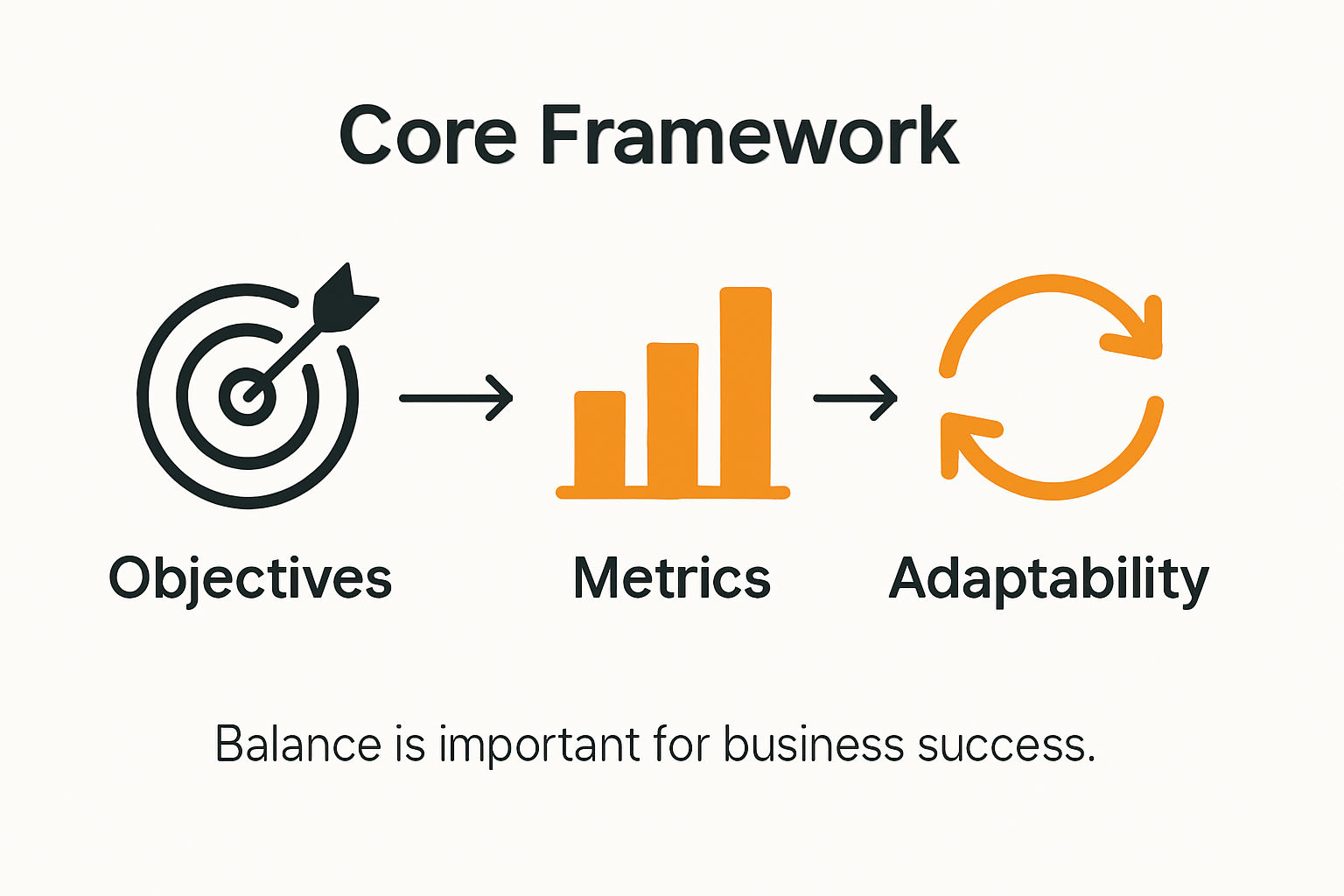
Ultimately, the most effective business frameworks are those that balance structure with flexibility. They provide clear guidance while simultaneously allowing room for creativity and innovation.
IMAGE:descriptive_key_1] [Explore our comprehensive guide to business growth frameworks to discover how top entrepreneurs leverage these strategic tools to transform potential into sustainable business success.
Steps for Effective Implementation
Implementing business frameworks requires a systematic and strategic approach. According to OpenStax, successful implementation begins with selecting the appropriate framework for your specific venture type. This critical first step involves understanding the unique components of each framework and matching them to your business’s specific needs, challenges, and growth objectives.
Harvard Extension emphasizes the importance of mastering both technical and business management skills throughout the implementation process. The comprehensive implementation journey typically involves these key stages:
- Initial Framework Selection
- Detailed Planning
- Strategic Execution
- Continuous Monitoring
- Adaptive Refinement
Practical implementation demands more than just theoretical knowledge. Entrepreneurs must develop strong leadership and communication skills to effectively integrate the chosen framework across their organization. This means creating clear communication channels, establishing accountability mechanisms, and fostering a culture that embraces systematic thinking and strategic adaptation.
The most successful implementations view frameworks not as rigid templates, but as flexible tools for business evolution. By combining structured methodology with creative problem-solving, entrepreneurs can transform these frameworks from theoretical concepts into powerful engines of business growth.
VIDEO:video_content] [Learn more about advanced business growth strategies in our comprehensive guide, where we dive deeper into practical implementation techniques that drive real-world results.
Pitfalls to Avoid in Business Frameworks
Navigating the complex landscape of business frameworks requires awareness of potential missteps that can derail strategic efforts. Strategy Capstone identifies several critical warning signs that entrepreneurs must vigilantly monitor: lack of clear objectives, insufficient analysis, inadequate performance metrics, and weak feedback mechanisms that can lead to misalignment and poor decision-making.
Bacoe highlights a particularly subtle pitfall: the danger of continuous framework modification. Paradoxically, frequent changes can actually indicate an incomplete or unstable framework. Successful frameworks should provide a consistent, reliable structure that remains stable while allowing strategic flexibility. The most effective frameworks demonstrate:
- Clarity of purpose
- Robust analytical capabilities
- Comprehensive performance tracking
- Responsive feedback systems
- Risk management protocols
- Adaptive capacity without constant restructuring
Entrepreneurs often fall into the trap of treating frameworks as rigid blueprints rather than dynamic tools. This mindset leads to mechanical implementation that ignores real-world nuances. The most successful business builders understand that frameworks are guides, not gospel. They remain open to intelligent adaptation, continuously learning and refining their approach based on actual results and changing market conditions.
Recognizing these potential pitfalls is the first step toward building more resilient business strategies. Explore our comprehensive guide to business growth frameworks to learn how to develop frameworks that are both structured and flexible, enabling sustainable business growth.
Accelerate Your Business Growth with Proven Frameworks
If you found value in understanding how business frameworks provide clarity, structure, and adaptability you will appreciate how Nomad Excel takes these concepts further by turning them into actionable growth experiences. Many entrepreneurs struggle with translating theory into results because they lack hands-on guidance and a supportive community to navigate the challenges of launching and scaling. Our immersive Entrepreneurship Archives offer solutions that focus exactly on your needs including step-by-step frameworks, expert mentorship, and a network that inspires accountability and innovation.
Don’t let uncertainty slow down your progress. Whether you are an individual founder or part of a team aiming to improve alignment and execution, Nomad Excel’s bootcamps and retreats are designed to help you implement these strategic tools effectively. Take the next step in advancing your venture by exploring how structured learning and real-world application at Nomad Excel can transform your business potential into measurable success. Visit our Business Archives to learn more about how to power up your entrepreneurial journey today.
Frequently Asked Questions
What is a business framework?
A business framework is a strategic tool designed to help entrepreneurs turn complex challenges into organized, actionable processes, acting as a map for building successful ventures.
How can business frameworks assist in decision-making?
Business frameworks help clarify strategic direction, reduce decision-making complexity, prioritize resource allocation, and minimize potential risks, thereby facilitating informed choices for entrepreneurs.
What are some popular types of business frameworks?
Some popular business frameworks include the Business Model Canvas, Lean Startup, Design Thinking Process, and Core Competency Model, each offering unique approaches to business development and strategy.
What are the key components of an effective business framework?
Key components include clear objectives, comprehensive analysis, performance metrics, feedback mechanisms, risk management, and adaptability, which together create a robust system for organizational growth.
Recommended
- Complete Guide to Business Growth Frameworks
- Outdoor Group Games For Adults Perfect for Team Building
- What Is Business Ideation? Complete Expert Guide – Nomad Excel – Your Entrepreneurial Adventure Starts Here
- Personal Business Growth: Complete Guide for Entrepreneurs – Nomad Excel – Your Entrepreneurial Adventure Starts Here
Comments are closed.